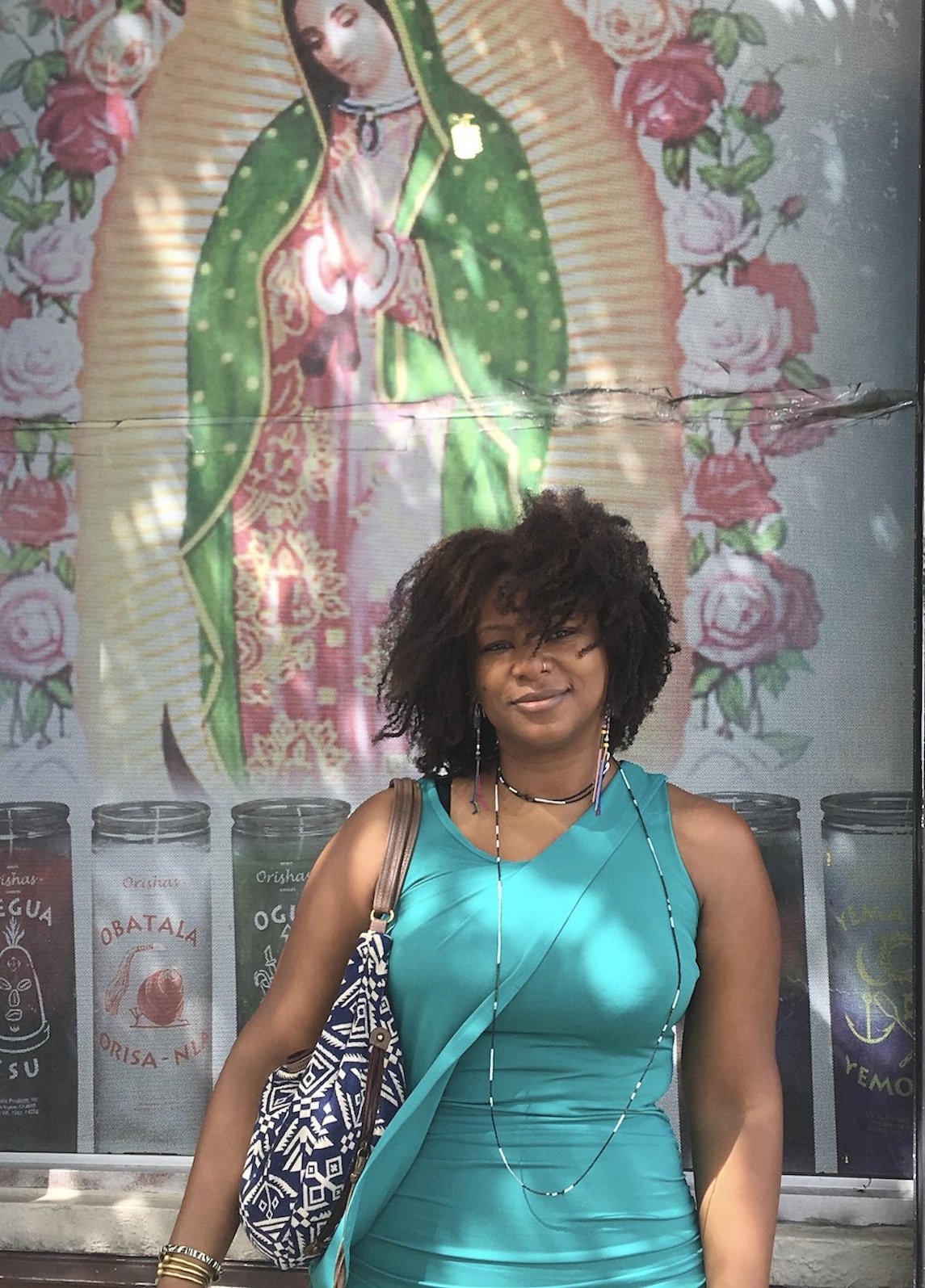
The exhibition's arrival in the year of the country's 250th anniversary was coincidental, its curator said.
Adam Schrader - Jul 18, 2026
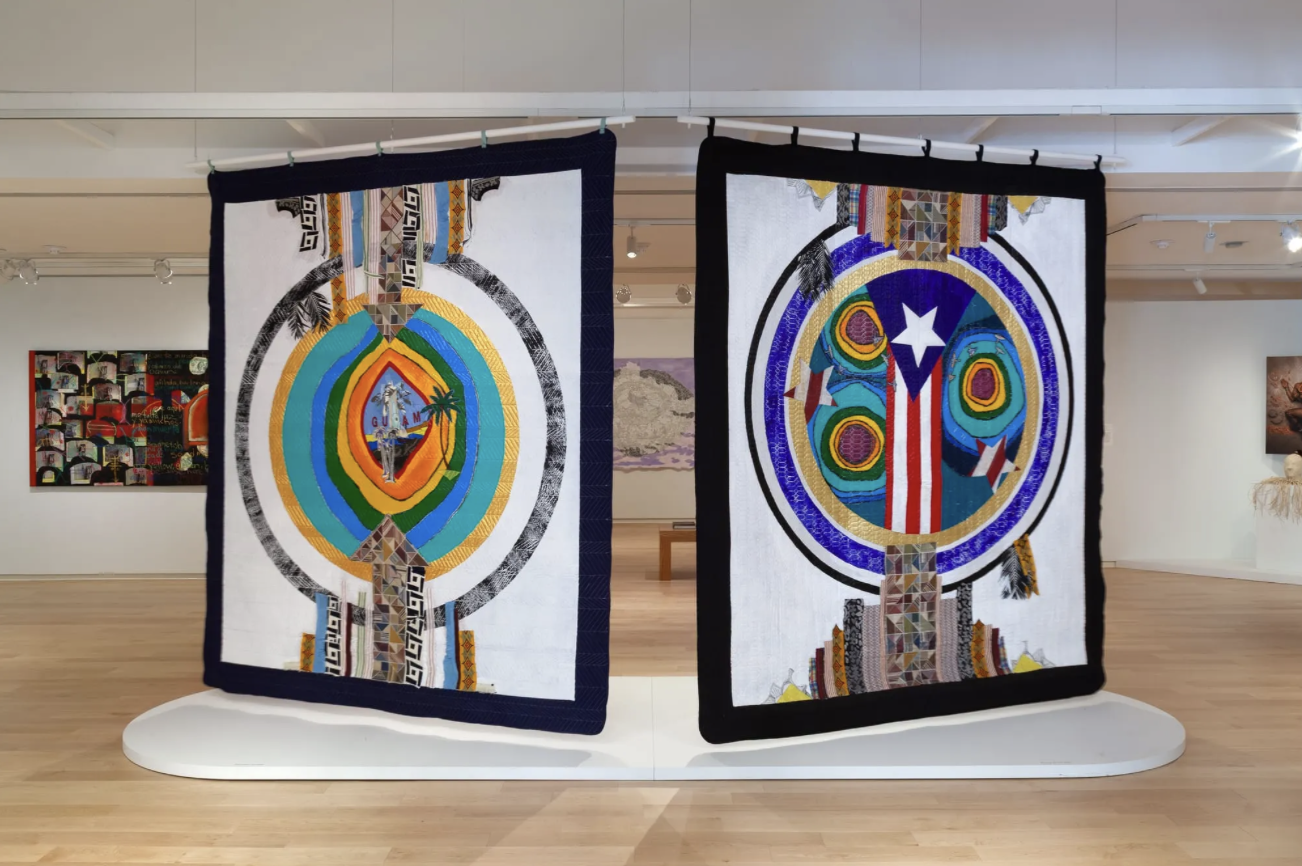
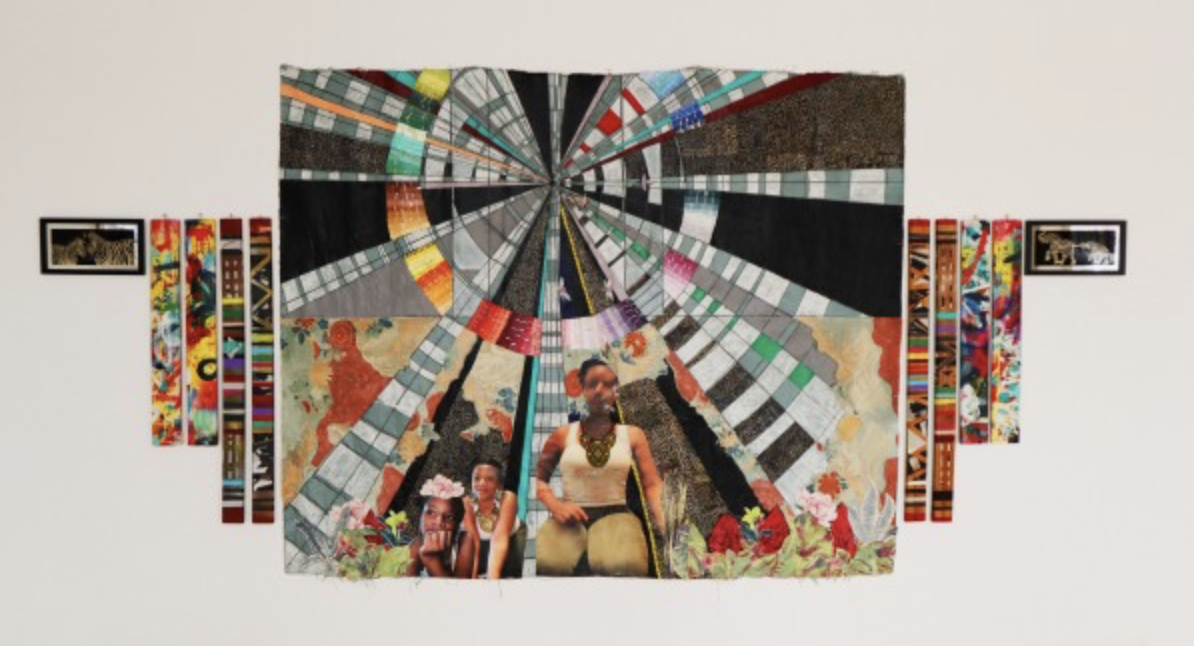
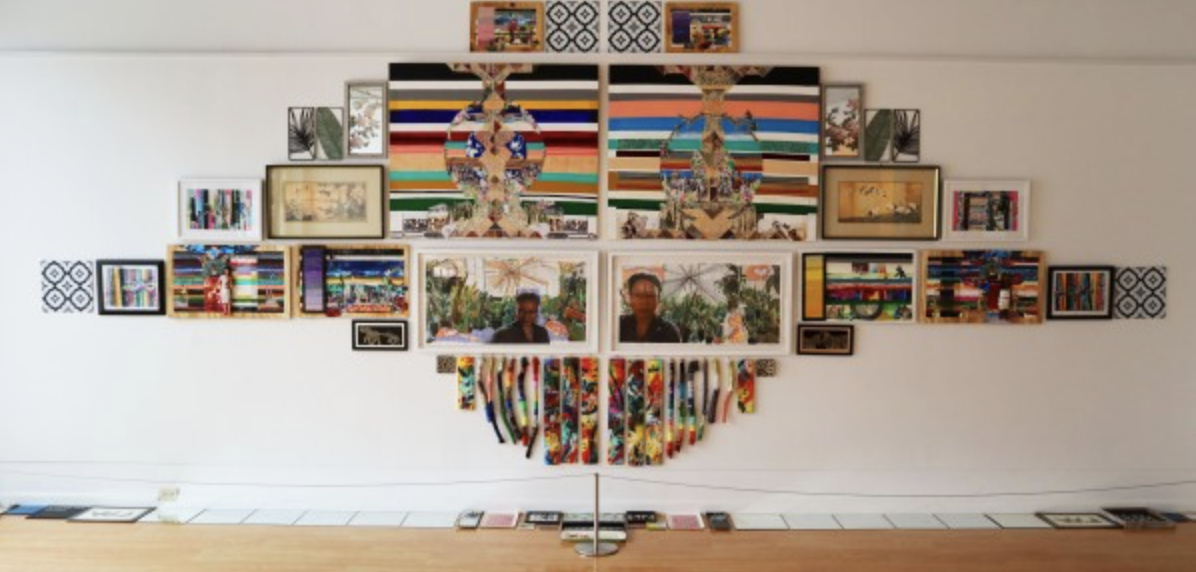
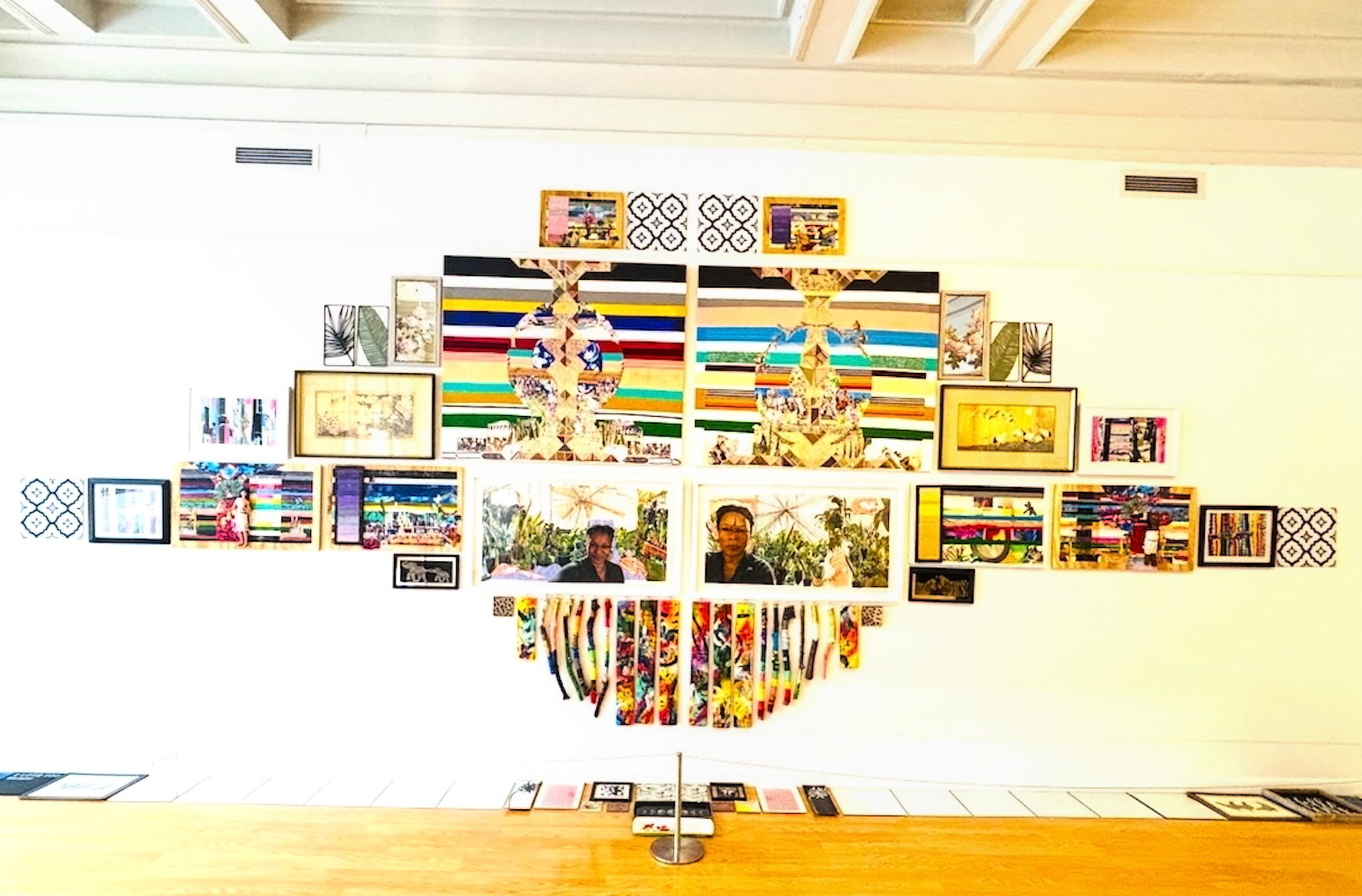
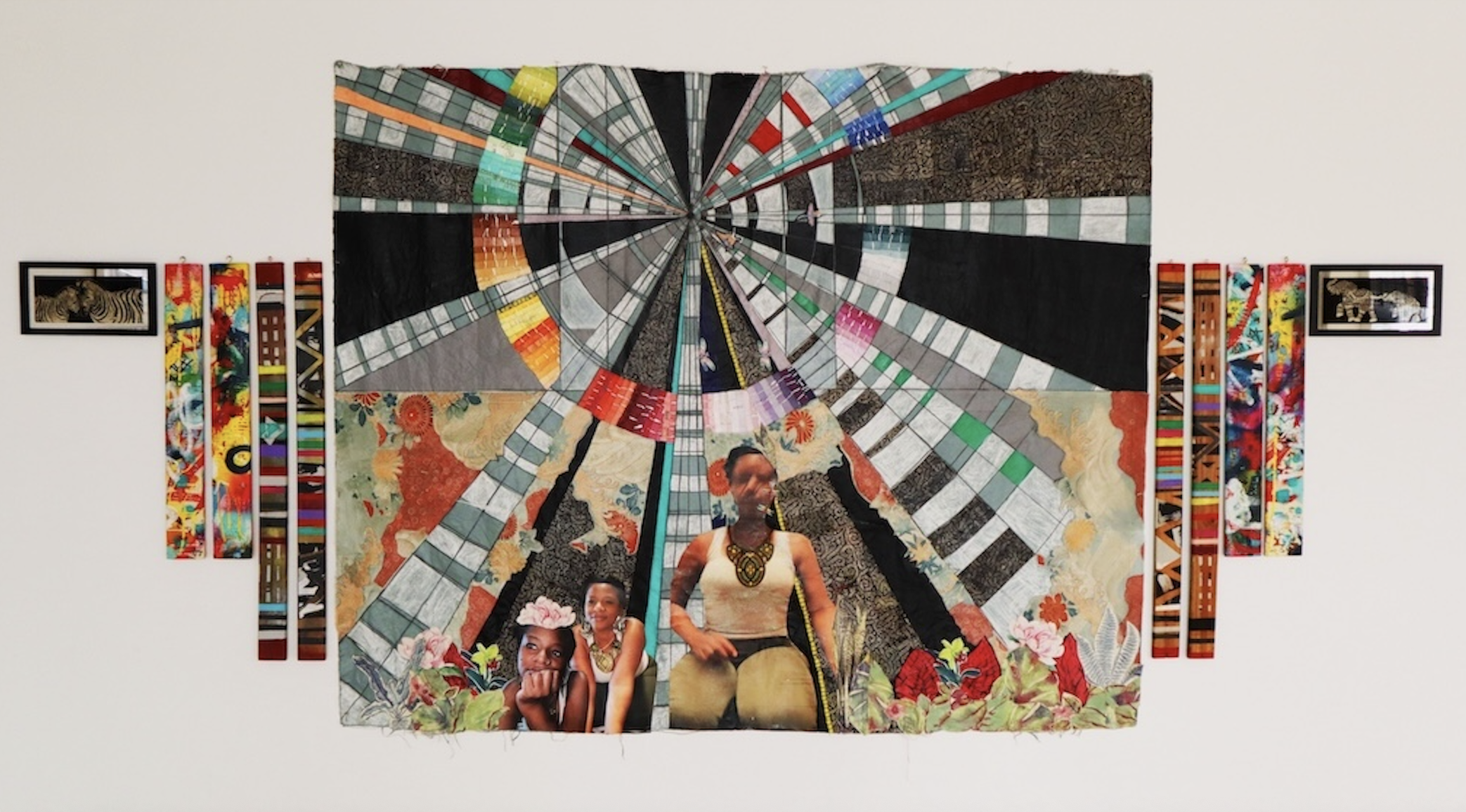
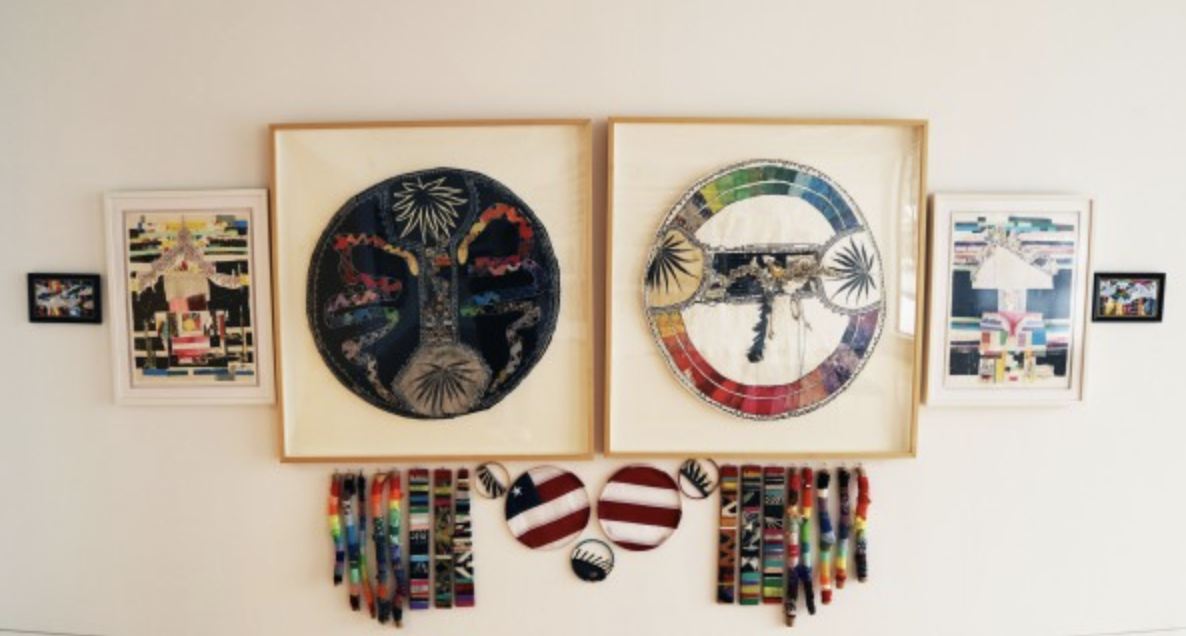
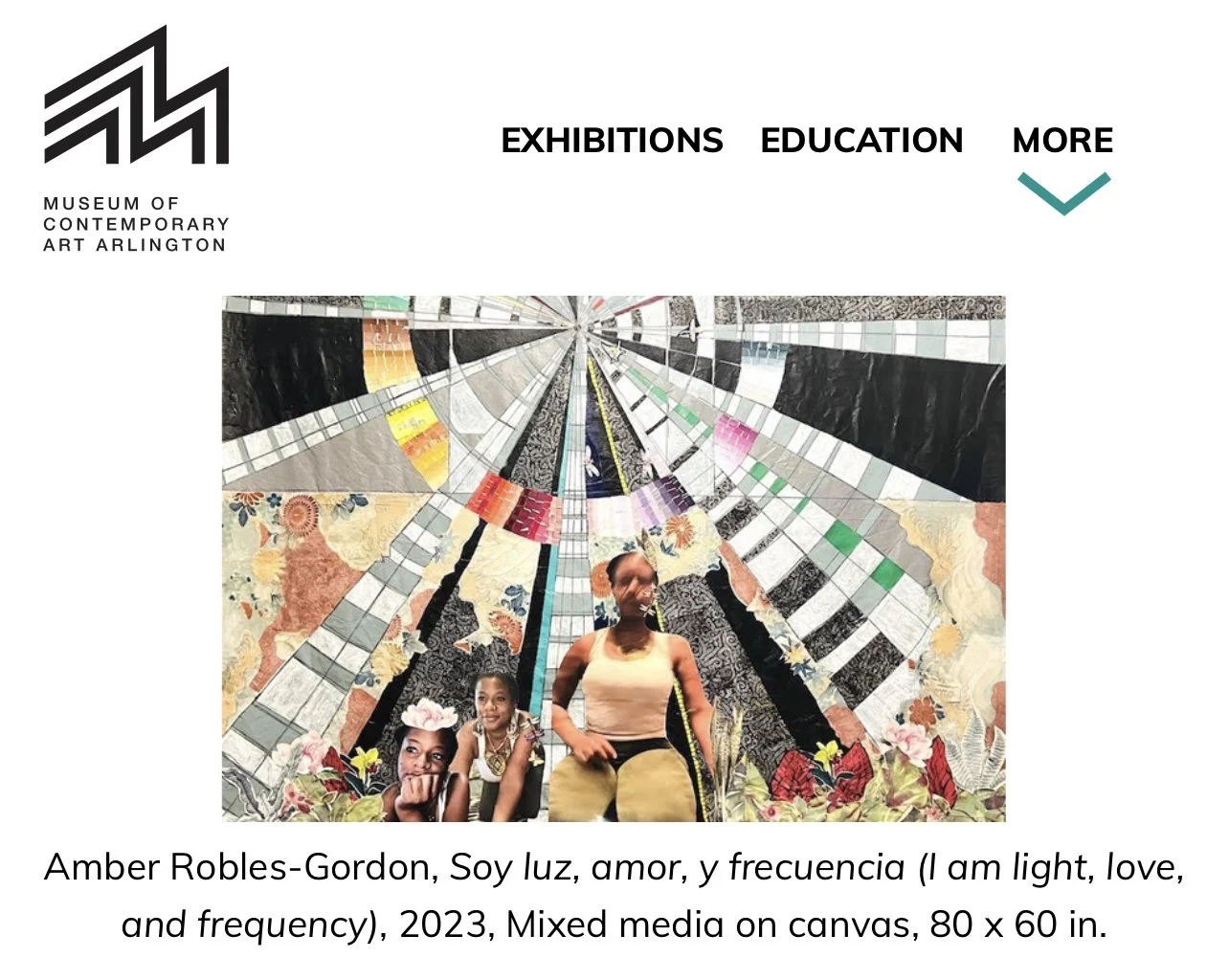
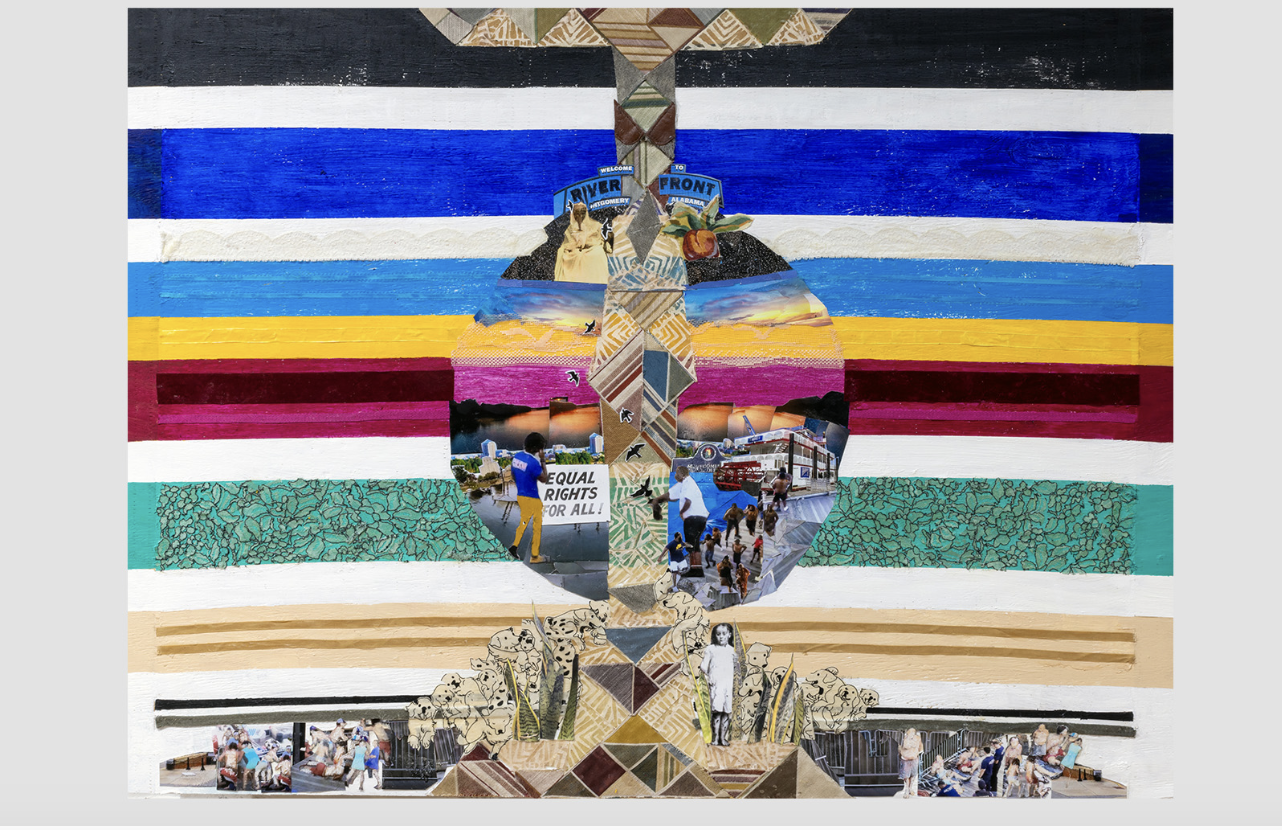
Installation view of Guam Political and Puerto Rico Political II by artist Amber Robles-Gordon. Photo courtesy of Art Index
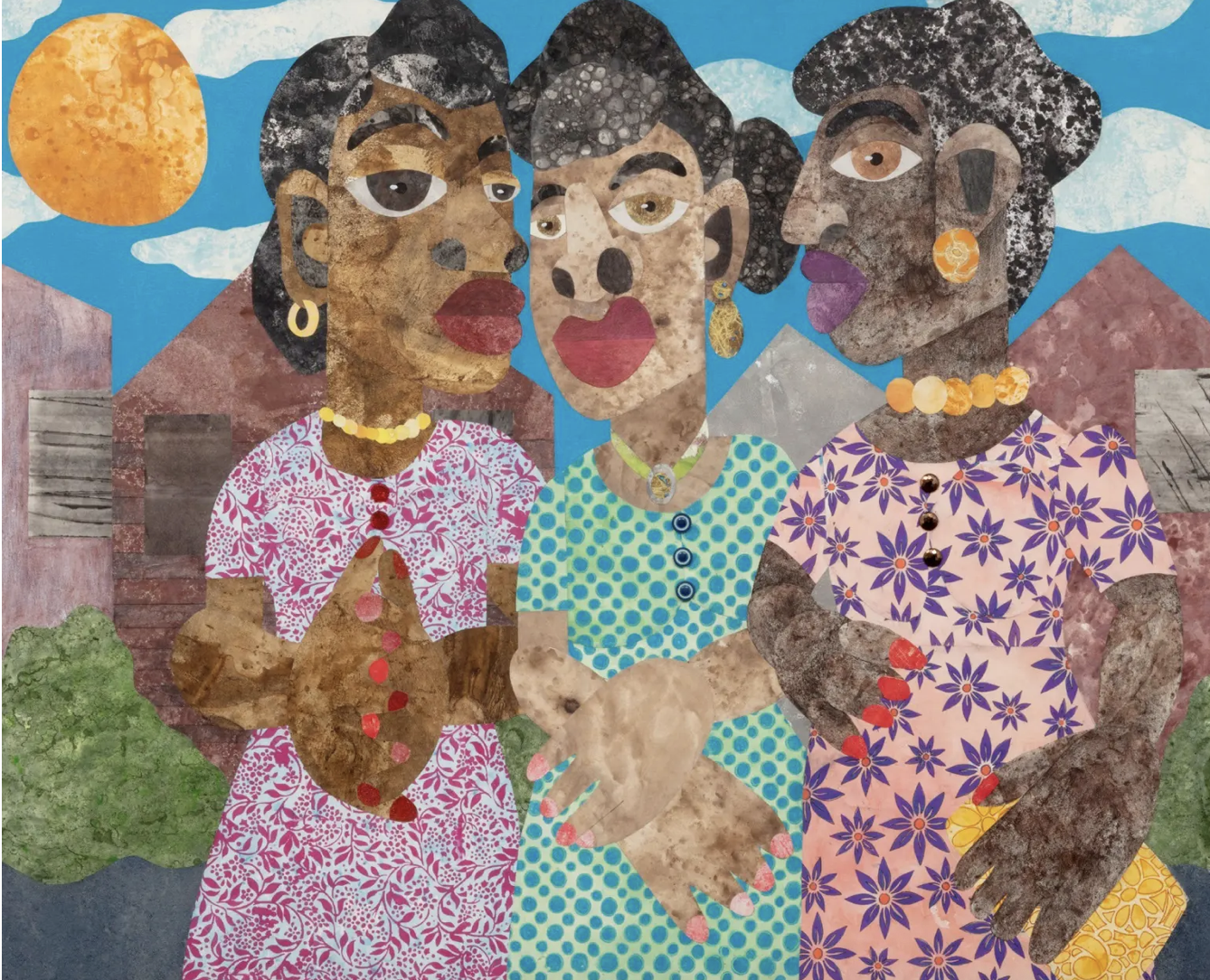
The Colby College Museum of Art has opened an exhibition asking how the United States became an empire, five years after a history course on the subject inspired its curator.
The show, "Imagining an Archipelago: Art from Cuba, Guam, the Philippines, Puerto Rico, and Their Diasporas," opened July 11 in Waterville, Maine, and runs through June 6, 2027.
It holds about 50 works by more than 40 contemporary artists connected to islands that came under U.S. control after the Treaty of Paris in 1898, two of which — Guam and Puerto Rico — remain U.S. territories.
The show arrived in the year of the country's 250th anniversary, which curator Jessamine Batario said was not the plan.
"It was coincidental, in all transparency," she said. The exhibition was first scheduled for 2024, then pushed to 2025 and 2026. "So it's not meant to respond to the 250th anniversary but I think it's certainly relevant to it."
"As an emerging country, we were colonies and rose up against the colonizer. This exhibition also considers that from the flip side," Batario said. "How did the United States become an empire? That's something we don't necessarily think about."
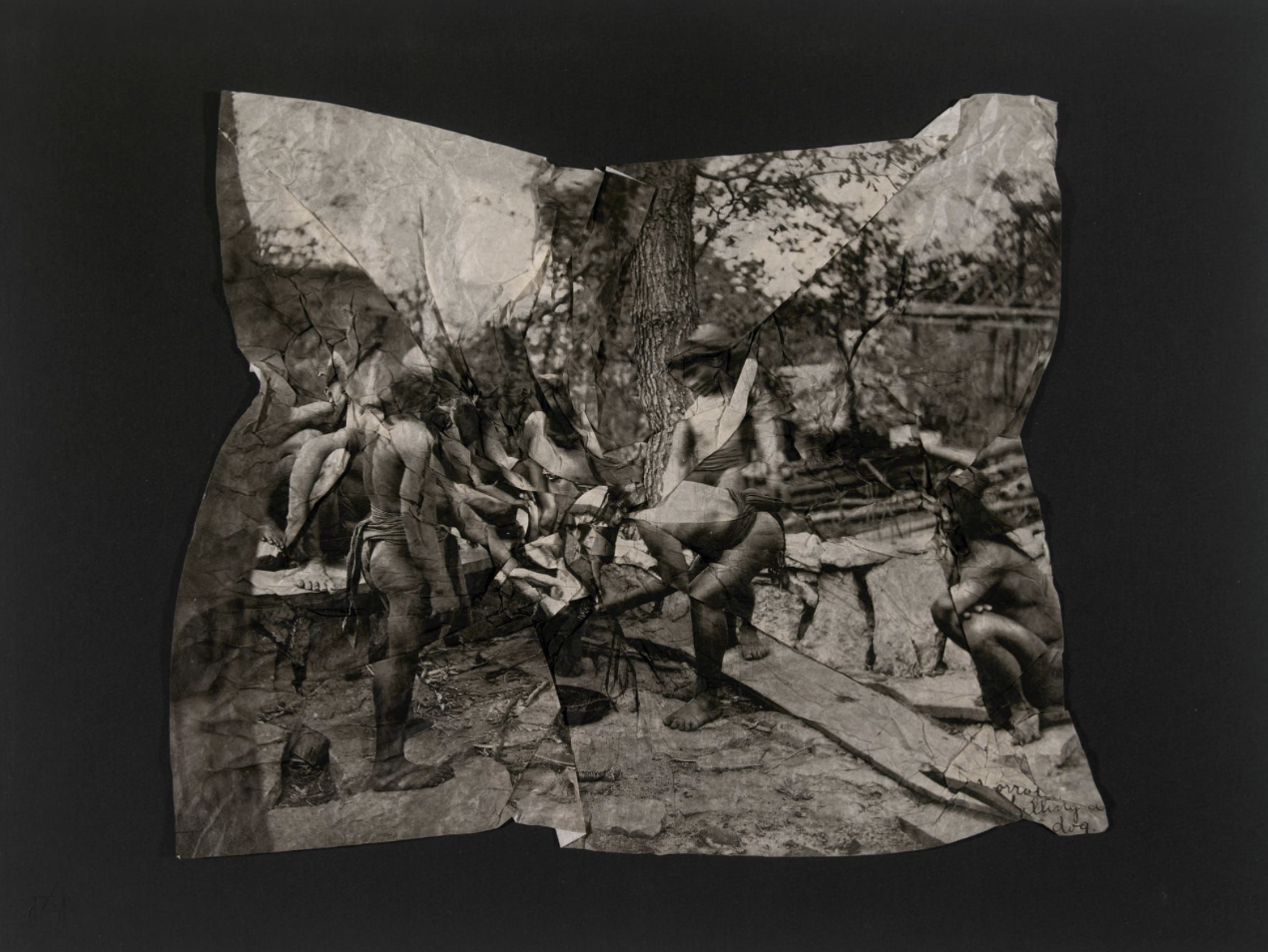
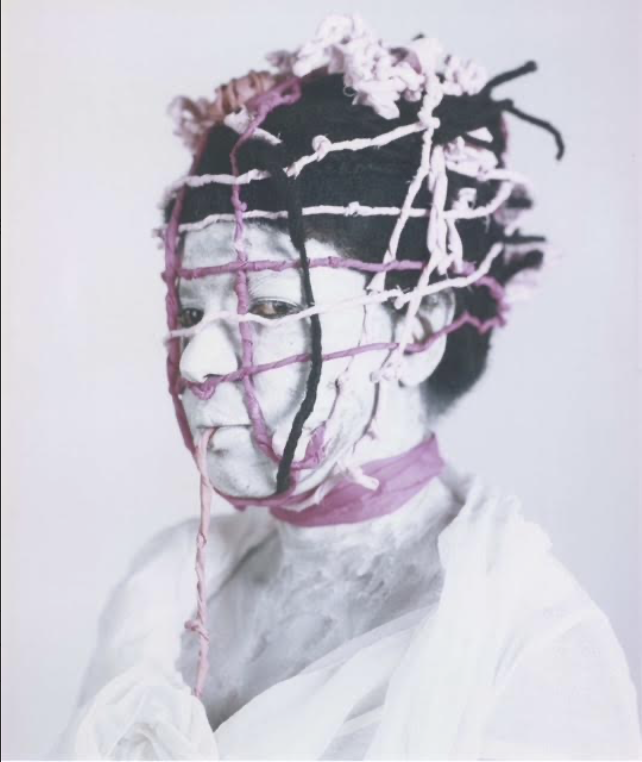
Stephanie Syjuco, Afterimages (Obstruction of Vision), 2021. Photo courtesy of Colby College Museum of Art
Batario said the project began in 2021 in conversation with Colby faculty in English, history, Spanish, American studies and anthropology.
"It was through the course of a history course, the history of U.S. empire, and thinking about what happens after Manifest Destiny and westward expansion. The one-word answer was islands," she said.
Batario was born in the Philippines and educated in California, where she said the war that produced the territories got a single class session.
"The Spanish-American War in 1898 was covered in history class for maybe a day," she said. "I was born in the Philippines, so learning about the history of where I was born in just one day felt like a shortcoming."
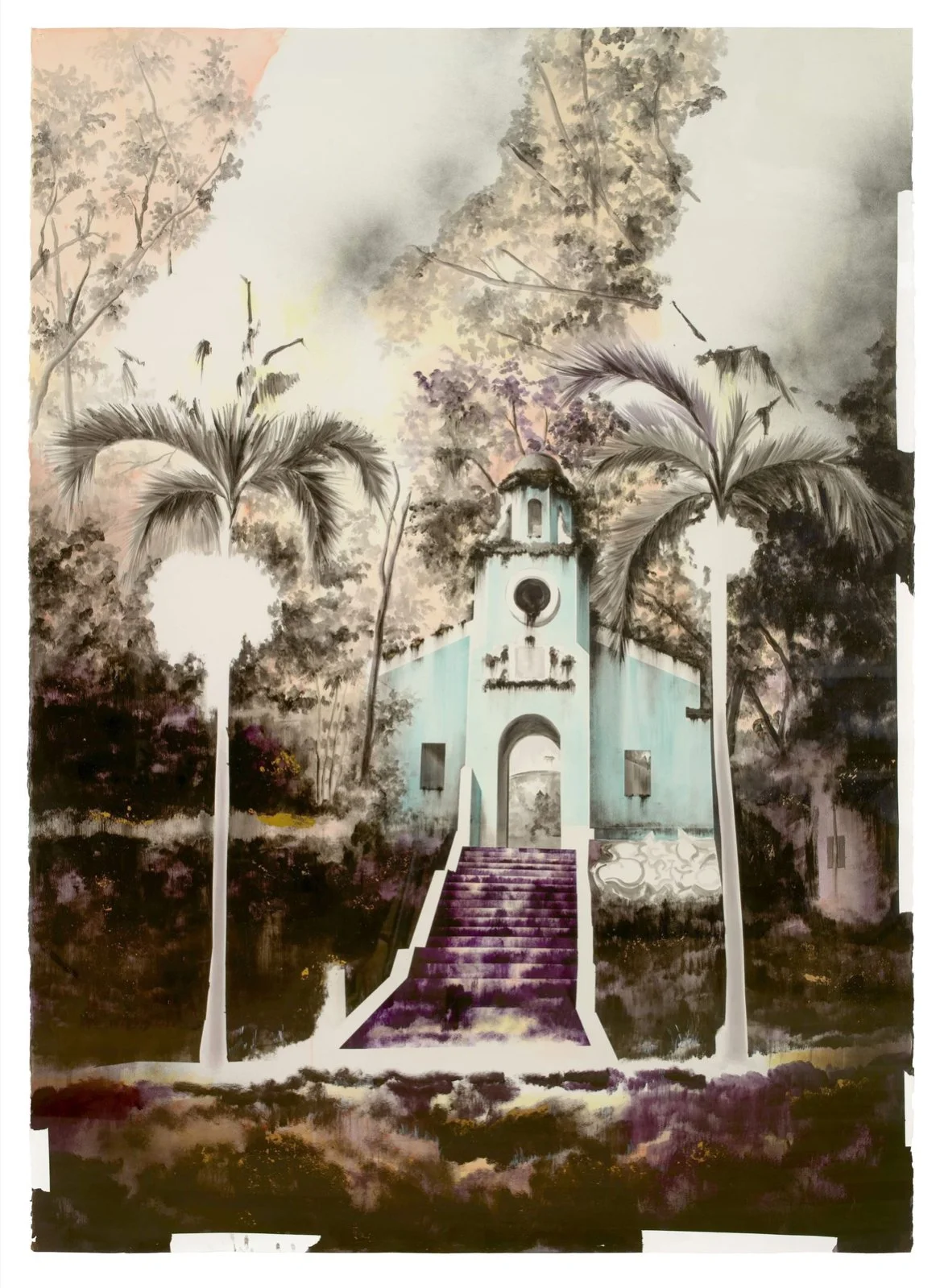
Gamaliel Rodríguez, Correctional Faith, 2022. Photo courtesy of Colby College Museum of Art
She said most people in the United States know the country has 50 states but little about the territories. Puerto Rico has gained wider attention through popular culture and figures like Bad Bunny, while Guam is known mainly through the military.
"I wanted to share the importance of these cultures beyond their military use, to share the lived experiences of the people through the artwork," Batario said. "These islands are becoming newsworthy because of their strategic locations. But many people live there with cultures that have existed for hundreds, even thousands of years."
She said she wants the show to move the islands out of the periphery for visitors.
"If you look at a map, islands are an afterthought. They are usually in the margins, not part of the continent, and seemingly small. This exhibition takes what is in the margins and places it in the center," Batario said.
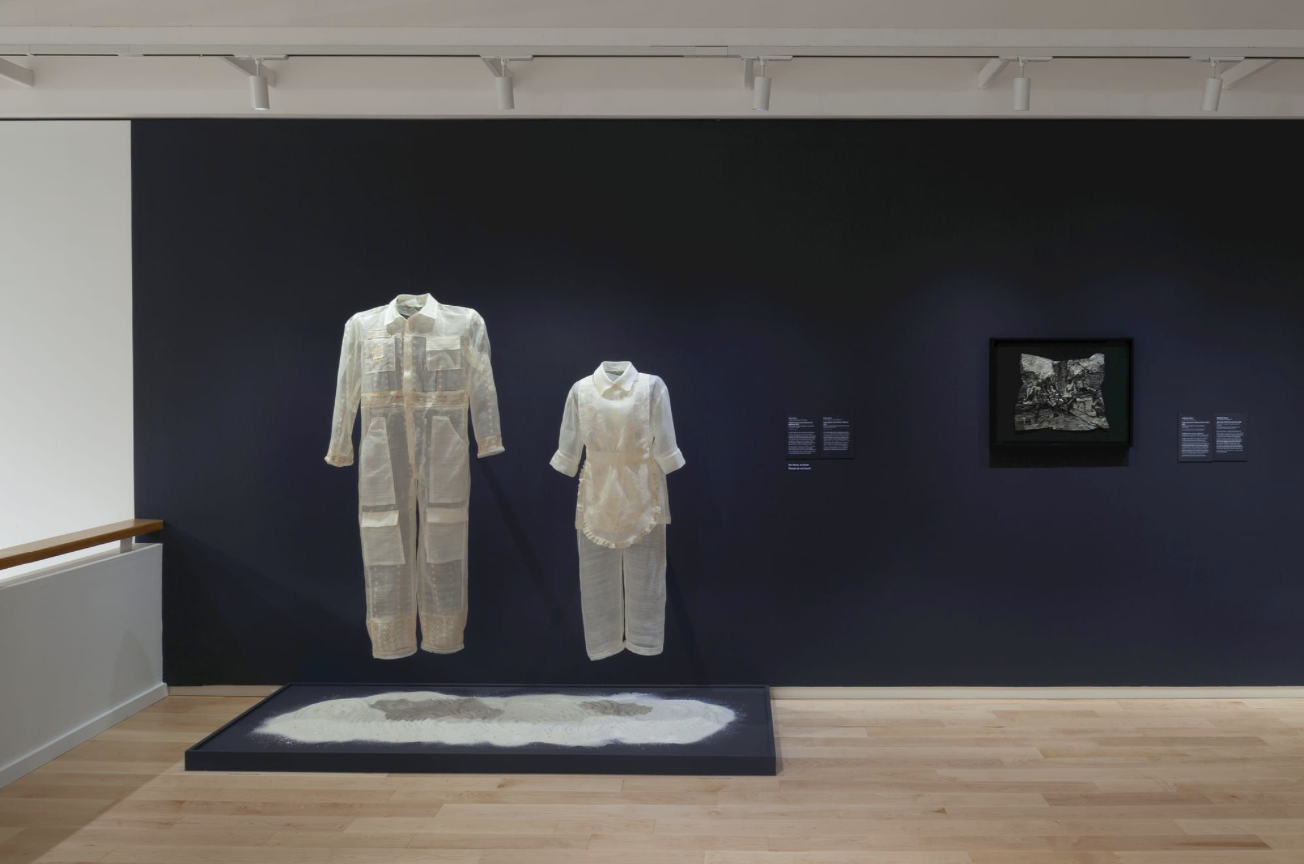
Installation view of Thea Canlas' Export Quality (Value Studies: Uniforms). Photo courtesy of Art Index
The museum built the exhibition with the artists rather than around them, holding two convenings in Maine in 2022 and 2024 at the Colby campus and on Allen Island in Muscongus Bay.
Batario said the sections on food, land, sea and sky, religion and spirituality, and militarization came from what the artists said there. A geographic section was added as an introduction for visitors unfamiliar with the places.
Batario also made studio visits across the United States and in Guam, Puerto Rico and the Philippines.
The Guam trip shaped the militarization section, she said. Jets from Andersen Air Force Base flew overhead while she was on the island, and an artist driving with her described the flights as routine.
"It's part of daily life. Nobody bats an eye because it just happens all the time," Batario said.
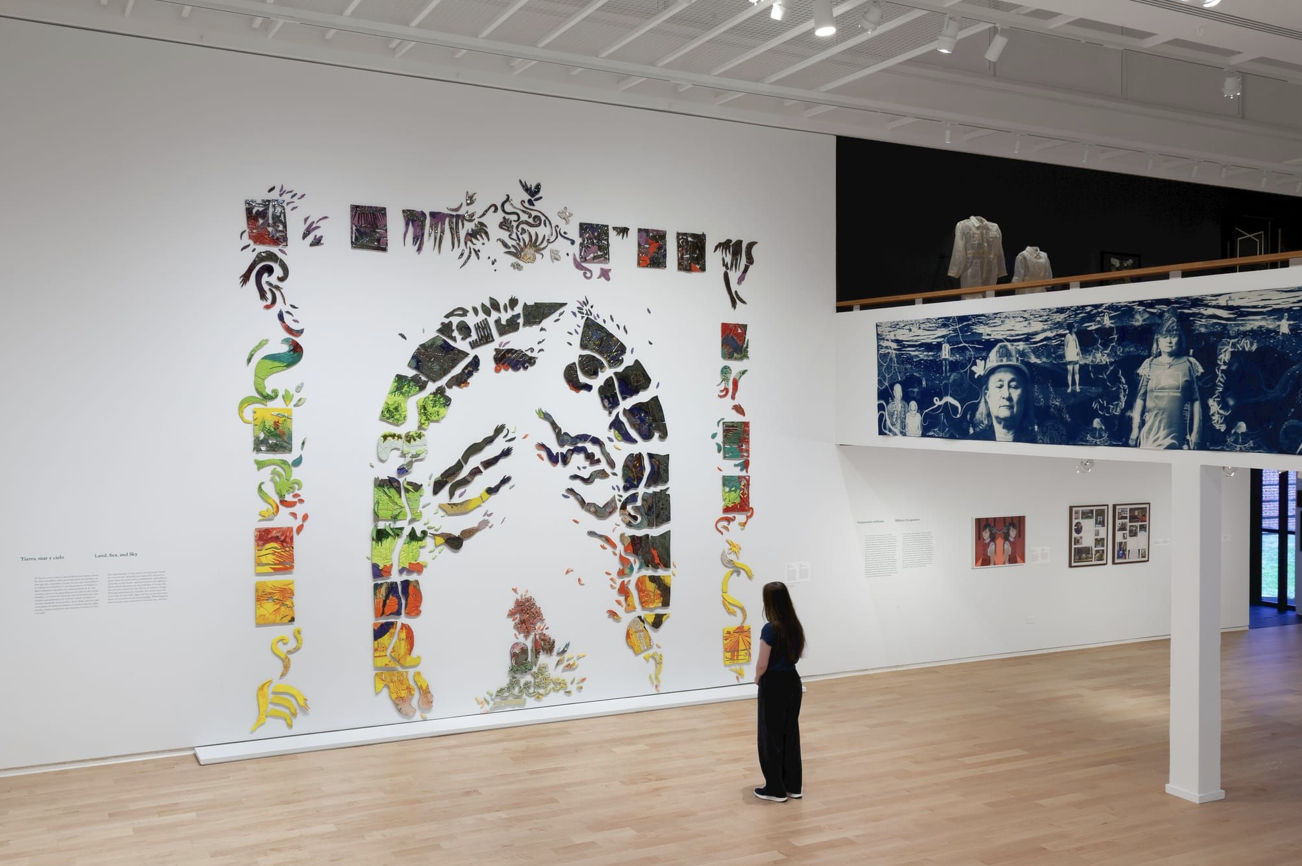
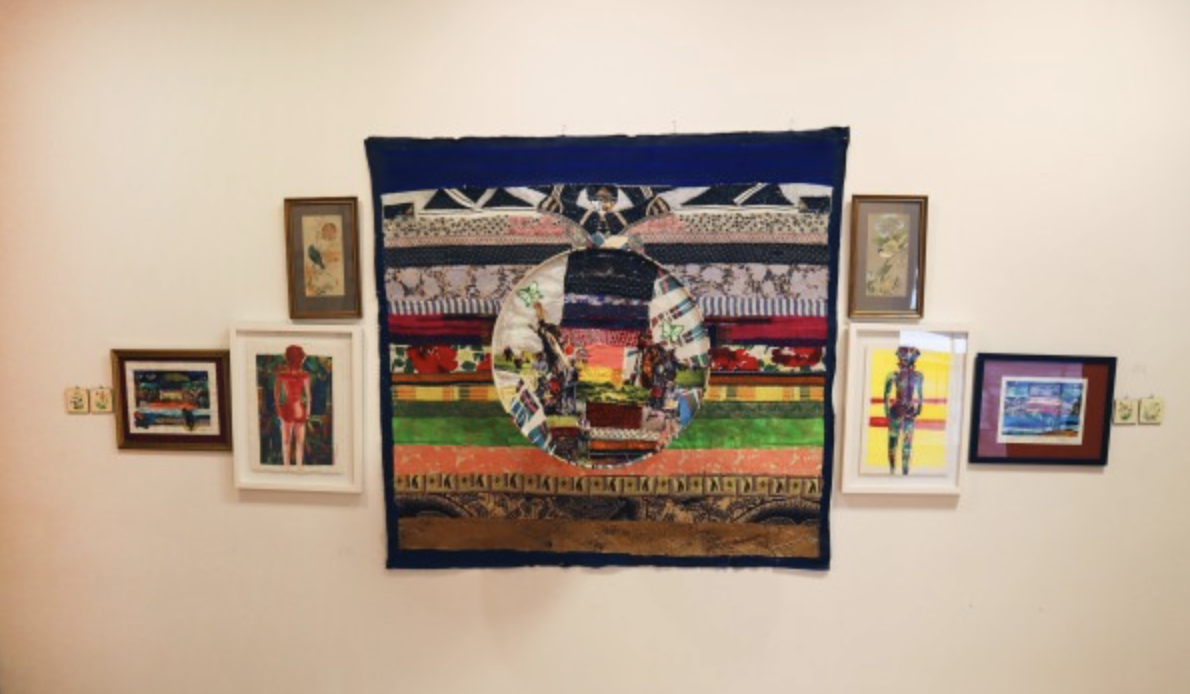
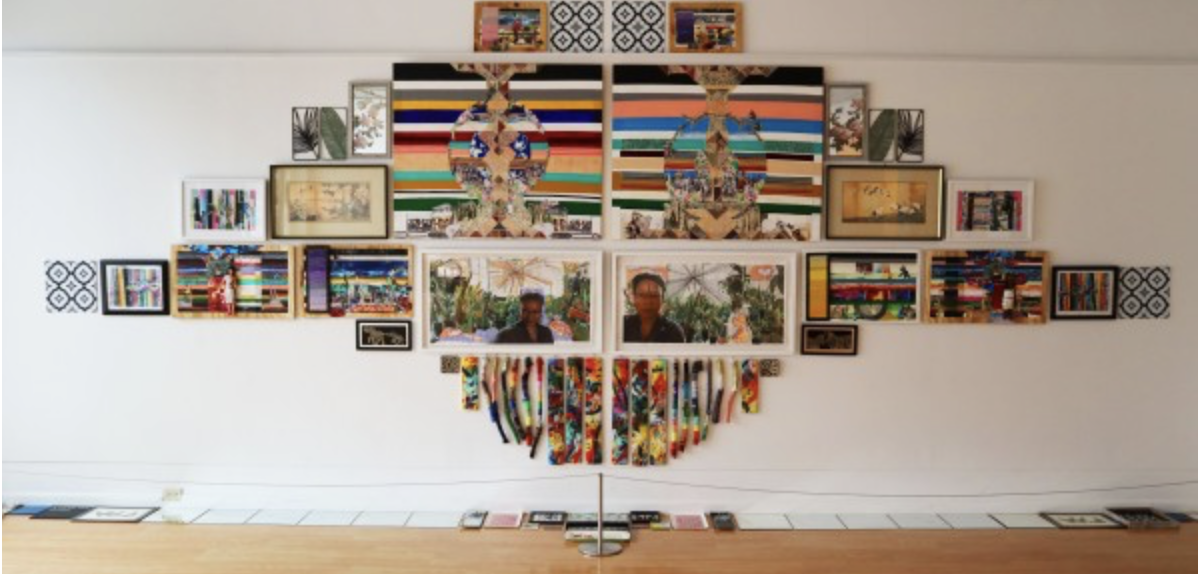
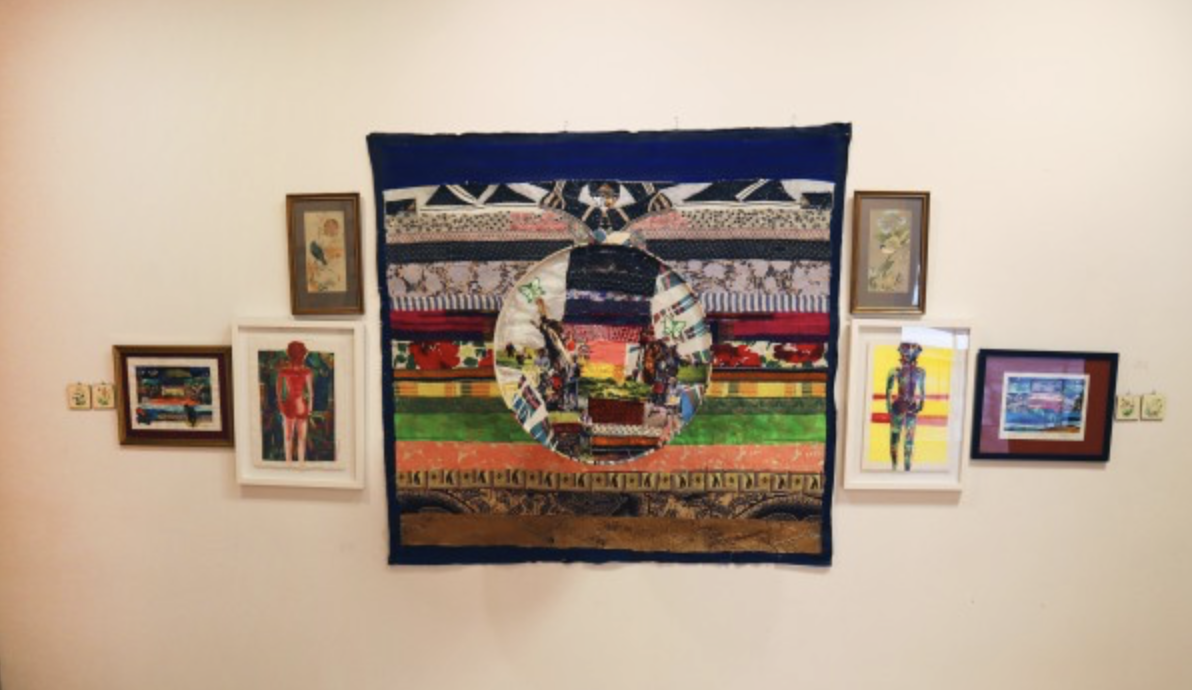
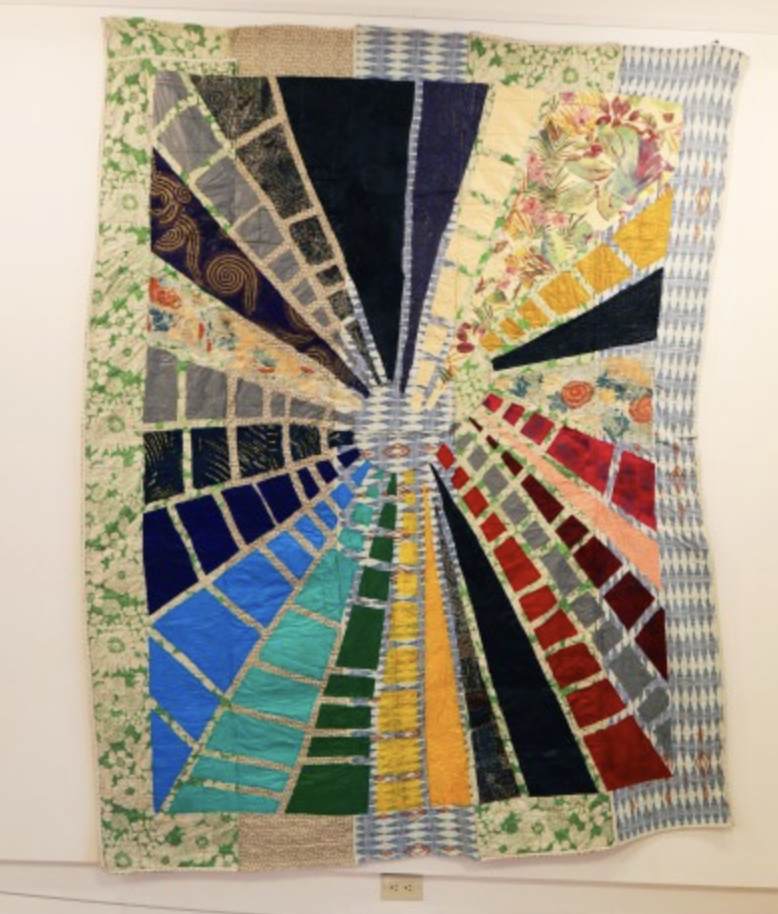
Installation view of Imagining an Archipelago: Art from Cuba, Guam, the Philippines, Puerto Rico, and Their Diasporas , Colby College Museum of Art, Waterville, Maine, 2026. Zilia Sánchez, Lunar negro con tatuaje , 1975. Photo: Art Index
Artists there also took her on a hike down to Fouha Rock, a formation in Fouha Bay that CHamoru tradition holds as the site where the first people came into being. The National Park Service designated it a National Natural Landmark in 1972.
"And so on the one hand, I felt like this military presence, and on the other hand, I felt like such a sense of sacredness in the place. And so there's a duality there," she said. "And it's really complex, too. A lot of CHamorus themselves are very patriotic."
Batario said the jets on Guam represent economic opportunity as much as intrusion.
"I wanted to be sure to convey multiple perspectives and not just one kind of indictment or response to these histories," she said.
That is the reason for the artist count, she said.
"I think the number of artists in the exhibition, 40, illustrates the multiplicity of voices and perspectives related to these places and histories," Batario said. "I could never imagine an exhibition that speaks to these histories from four different places with fewer artists."
She said she did not want one artist, or a handful, carrying centuries of a people's history, and that "inviting as many voices to the table as I could, given our space constraints" drove the selection. The works span painting, photography, sculpture, found objects, installation, ceramics, charcoal and weaving.
The exhibition includes new commissions by Jerome Reyes, Sara Jimenez, Mariquita "Micki" Davis, Isa Gagarin and Camille Hoffman, whose site-specific installation runs along a corridor connecting the museum's Lunder Wing to the show.
Batario pointed to the exhibition's militarization section as the place where the perspectives collide.
"Some of the most patriotic people you meet are from these islands," she said, describing viewpoints in that section as incongruent. "It's not just one response to these histories. It's multiple. I think the legacies of these histories are unpredictable. You have no idea how people will respond."
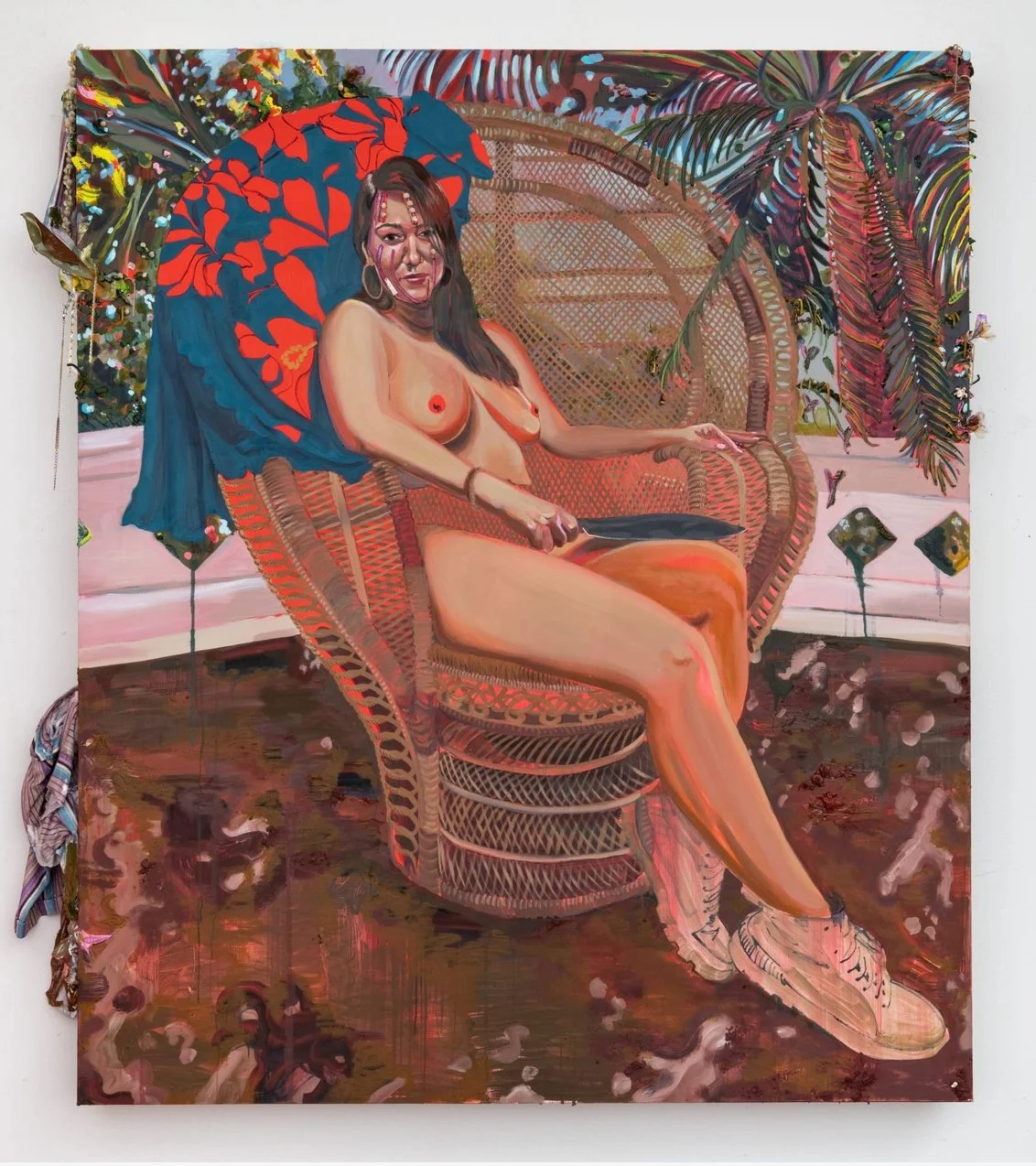
Gisela McDaniel, Put it down for her, 2023. Photo courtesy of the artist and Pilar Corrias
Asked how much weight she placed on political expression in a contemporary show on colonization, Batario said she did not build it to argue a position.
"I don't think of this exhibition as partisan. It includes multiple perspectives, and people can decide what they want from what they learn," she said.
Every artist in the show is contemporary, Batario said, including several who have died, some as recently as two years ago and some in the 1990s. The oldest work dates to 1975, and most were made after 2000, many in the last five years.
"The exhibition focuses on recent work because it drives the point home that these histories are not just in the past," she said. "These histories have legacies that have a bearing on how people live in their communities today."
She said the show is also answering an earlier one, "1898: U.S. Imperial Visions and Revisions," which ran at the Smithsonian's National Portrait Gallery from April 2023 to February 2024 and handled the period through historical portraiture.
"In many ways, these two exhibitions are bookends to each other and build on that art historical discourse," Batario said.
Working on contemporary art meant the exhibition had to track events as it was being assembled. Beatriz Santiago Muñoz's 2014 video Ojos para mis enemigos follows a person walking through a decommissioned Navy base in Puerto Rico and the wildlife that has moved into it, according to the exhibition checklist.
"This is what happens when you decommission a Navy base. Nature comes back," Batario said, calling the work a document of a temporary possibility.
The base went back into use in late 2025, and Batario said the museum acknowledged that in the presentation, citing increased tensions in the Caribbean. She did not name the base. The Navy reactivated Naval Station Roosevelt Roads in Ceiba, closed since 2004, as U.S. forces built up in the region.
The delays that pushed the opening to 2026 were logistical, she said, related to spacing large exhibitions across the museum's program.
"So, truly, the decision to push it back was to keep the staff in mind and ensure we had the resources to do this properly," Batario said.
Batario said the work changed her relationship to her own family history. She said she often consulted with her mother “on all kinds of cultural issues.”
She singled out Thea Canlas' Export Quality (Value Studies: Uniforms), a 2023 installation of machine-embroidered piña cloth, white sand, sugar, pearls and teeth, according to the checklist. Canlas took the pineapple fiber traditionally reserved for the barong — the shirt worn at weddings and, by the president, at state events — and cut it into a workman's jumpsuit and a maid's uniform.
"It's a beautiful, exquisite fiber," Batario said, adding that the piece "made me think about the relevance of culture and our own traditions" as something for people doing daily work rather than public figures. She called it one of her favorite installations in the show.
Batario said far more artists came out of the studio visits than the galleries could hold.
"I think of this exhibition as part of a longer curatorial process. Just because I met an artist and didn't include them doesn't mean I won't work with them in the future," she said.
Doing the show in Maine is less unlikely than it sounds, Batario said, both because Colby's museum is an academic one and because the communities are present in the state.
"It might seem odd, but there are small communities of Filipinos and Puerto Ricans in Maine," she said. "They're not as sizable as you might find in big cities, but they are still here."
After Waterville, the show has plans to travel to museums in Puerto Rico, California and New Jersey through the start of 2029.
Urgent Matter is reader-supported.
Please consider subscribing to support independent arts journalism.