OCTOBER 20, 2025
TIEN NGUYEN
Student Contributor, University of Maryland
Womanhood and femininity finds itself in every corner of life. Church pews, miniature gardens and passed-down accessories— artists Lavett Ballard, Amber Robles-Gordon and Evita Tezeno bring Black womanhood and female friendships to the canvas through their exhibition, “Solace and Sisterhood,” at the University of Maryland’s David C. Driskell Center.
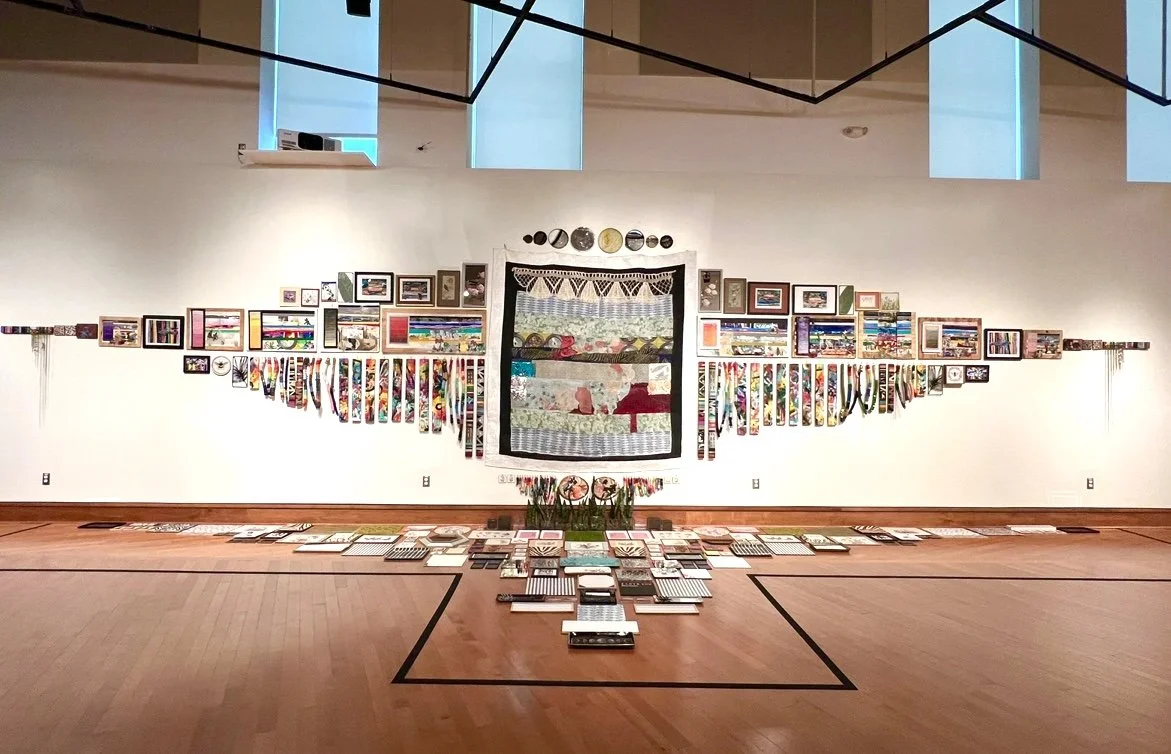
Entering the space, a quilt hangs on the far-left wall. It mixes textures, patterns and colors to relay silent stories. Tranquility is quite literally woven into the seams, with each cloth representing a relationship and story of its own.
Amber Robles-Gordon invited her friends— Wesley Clark, Elana Casey, Lavett Ballard, Alanzo Robles-Gordon— to contribute to the piece. On the outskirts of the quilt are framed photos and vibrant talking sticks that the artists have designed to display their cultural experiences.
ORIGINAL PHOTO BY EVITA TEZENO
Nodding to Robles-Gordon’s connection to the environment and her “evolving relationships and personal transformation,” a miniature garden sits on the ground.
Robles-Gordon’s “En homenaje al amor, la naturalez y la amistad, Palos Parlantes (In tribute to love, nature, and friendship)” represents friendships and how together, the experiences that make people stand as individuals simultaneously connect them.
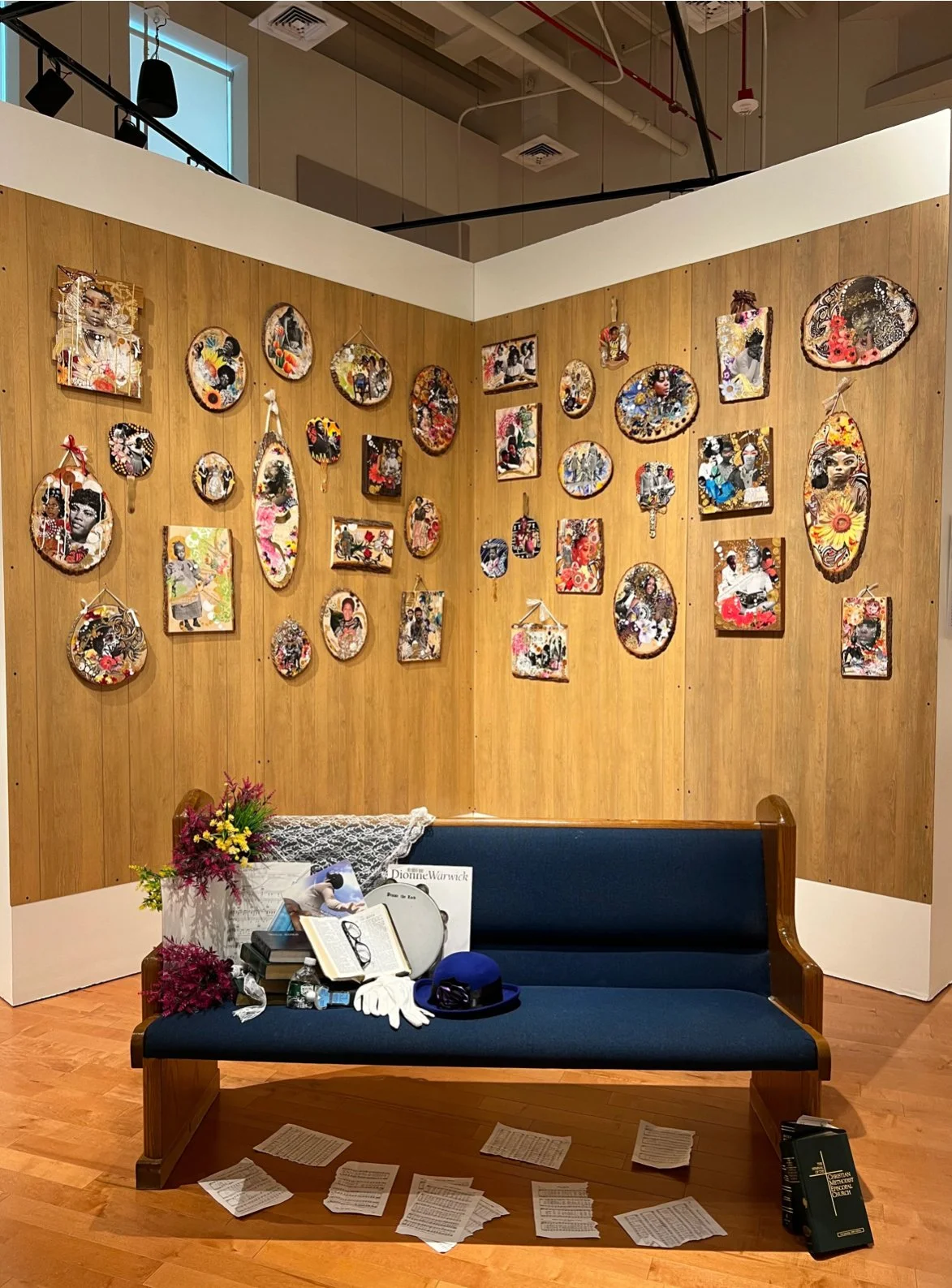
Lavett Ballard’s “Say A Little Prayer” is an homage to her religious connection, with symbols of her grandmother’s experience with the church and Dionne Warwick. It is a cultivation of the “personal and collective experiences of Black women, spirituality, and cultural history,” with nostalgia circling all around.
At the forefront of the installation sits a navy blue-cushioned church pew. A Dionne Warwick album is propped up against the seat, while sheet music is scattered delicately on the floor. Hardcover Bibles, fuchsia-and-yellow flowers and lace hanging over the back of the pew decorate the front of the installation, all symbols of her grandmother’s devotion to Black church.
ORIGINAL PHOTO BY LAVETT BALLARD
Behind the church pew are mixed-media collages of Black women and their contributions to Black suffrage and history. The colorful, gold-accented wood collages are a testament to the strength and beauty of Black culture. History, as well as Ballard’s connection to religion, draws people in from a multitude of perspectives.
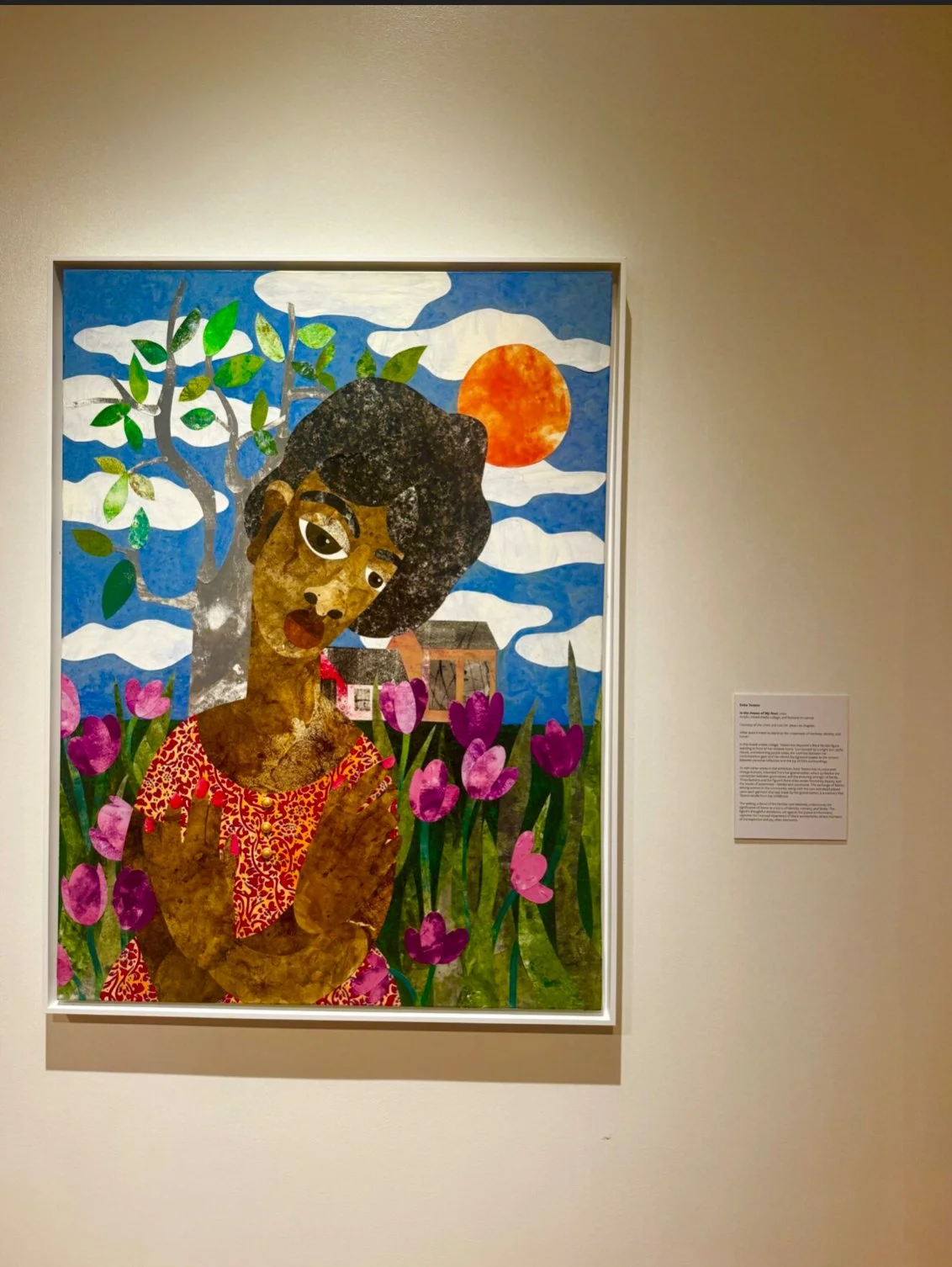
Evita Tezeno’s piece, “In the House of My Soul,” prompts us with the question, “what does it mean to stand at the crossroads of memory, identity, and home?” The focus of the canvas is a Black woman wearing a red, floral dress with three buttons at the center of her dress. The buttons were passed down to Tezeno from her grandmother, signifying the strong relationships between lineage and one’s heritage.
A home, a flourishing tree and tulips sit in the backdrop, accompanied by an orange moon that represents feminine energy. A woman is surrounded by a positive, peaceful atmosphere, while her dress represents the bond between women when sharing accessories and clothing.
Every person can appreciate “Solace and Sisterhood” and how it connects to their own experiences. The exhibition allows community members to leave the Driskell Center with their own appreciations and connections to the pieces.
“Solace and Sisterhood” will be open until Dec. 5, 2025, Monday through Friday from 11 p.m. to 4 p.m.
https://www.hercampus.com/school/maryland/solace-and-sisterhood-into-black-womanhood-female-friendships/