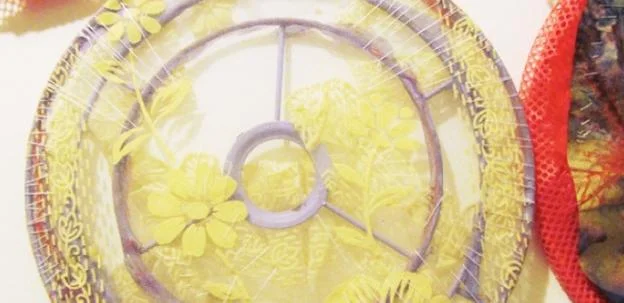
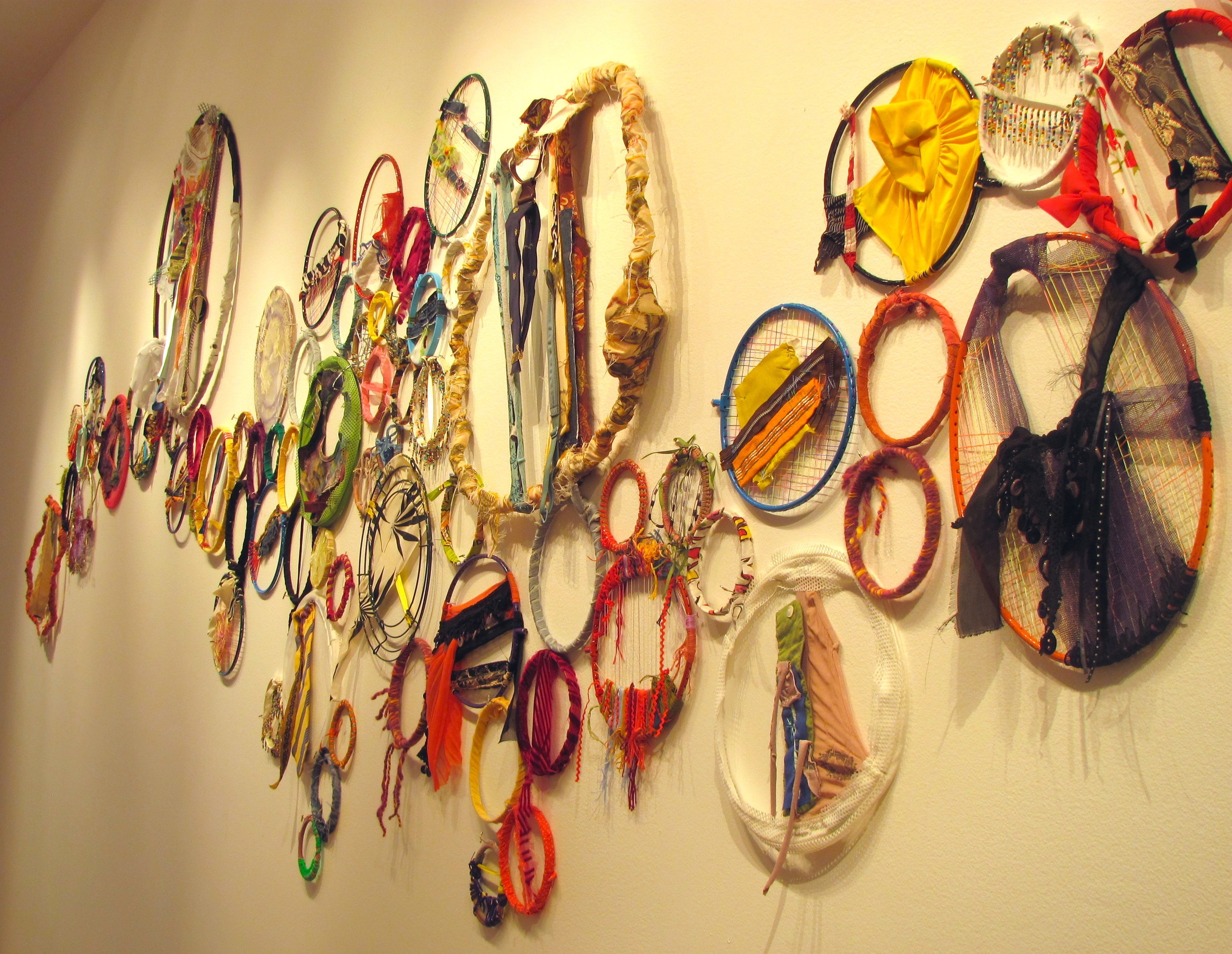
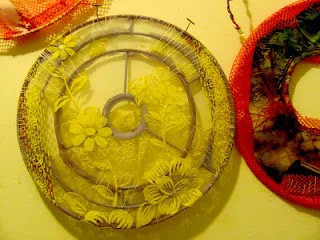
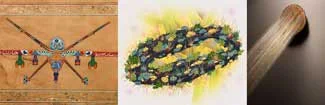
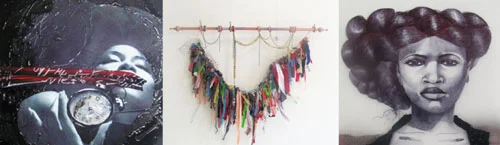
The new works included in With Every Fiber of My Being will highlight the intrinsically personal themes Robles-Gordon explores in her art through its incorporation of re-purposed second-hand materials such as clothing and accessories. The artist draws connections between her use of personal found items; the idea that varied elements come together to make one individual in work that is marked by her bold use of color and rhythmic melding of disparate objects. Robles-Gordon earned a MFA from Howard University in May 2011, and has lived and made art in Southeast DC for the past 13 years.
Read MoreThe Story Behind Delusions of Grandeur
The Washington Post
By Michael O’Sullivan
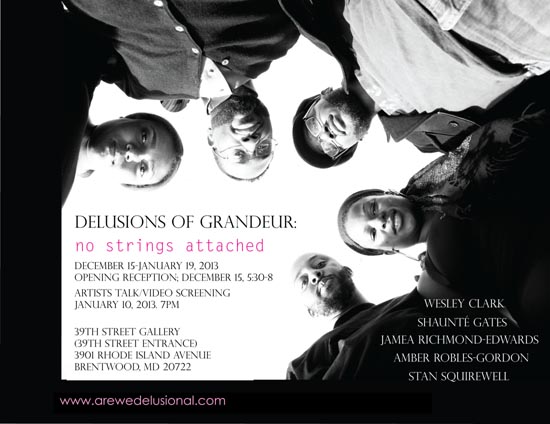
“You have to be delusional to want to be an artist,” says Amber Robles-Gordon, who, with Shaunte Gates and Jamea Richmond-Edwards, debuted as the art collective Delusions of Grandeur with two back-to-back exhibitions in the summer of 2011. Originally funded by a grant from the D.C. Commission on the Arts and Humanities, the group has expanded to five members with the addition of Wesley Clark and Stanley Squirewell.
As tough as it is for anyone to make it as an artist, Robles-Gordon says it can be tougher for artists of color. It’s also tough, she believes, for artists struggling to balance careers and parenthood. (Several members of the group have young children.)
Having first come together as a kind of art salon, with the goal of fostering dialogue among its members, the collective has now set its sights on somewhat loftier goals. Its name may be tongue-in-cheek, but Robles-Gordon admits that “we do want to be in the history books.”
http://www.washingtonpost.com/gog/exhibits/no-strings-attached,1245339/critic-review.html
Subtle Attention-Seekers Without Strings
Delusions of Grandeur seems about right for the name of an artists’ collective showing in a hole in the wall in Brentwood.
Located on the second floor of the Gateway Arts Center, the 39th Street Gallery is a 450-square-foot box that has been known to put on pretty cool little shows, including a recent micro-retrospective of the great D.C. painter Manon Cleary, who died last year. But the National Gallery of Art it is not.
Read MoreWETA Around Town
Jasper Johns: Variations on a Theme at the Phillips Collection through September 9, 2012. Discussion with Robert Aubry Davis, Amber Robles-Gordon, and Bill Dunlap.
Join the circle of prominent art, theater and film critics who make WETA Around Town your one source for the latest Washington-area reviews and recommendations.
WETA Around Town video segments are broadcast on TV 26 in between programs, nightly prior to the 7:00 pm program, and weeknights prior to Charlie Rose.
You can also subscribe to the WETA Around Town podcast and automatically receive the latest reviews each week. Or watch anytime online by clicking on a video below or visiting our video portal. www.weta.org/tv/local/aroundtown
#MyDeanwood: Honoring the Past to Create the Future
The Washington Post
‘#MyDeanwood’
Patchwork is the operative mode — and metaphor — in “#myDeanwood: Honoring the Past to Create the Future,” a survey of art chosen to reflect Northeast Washington. There are other media in this small show, but most of the pieces are assemblages. Journalist and artist Esther Iverem makes quilted collages with historical elements, both personal and cultural; she sometimes invokes Oya, the Yoruba spirit of communication with ancestors. Sherry Burton Ways’s dolls are constructed of sticks, fabric, paper and what appears to be human hair; mounted atop strips of patterned fabric, these totemic figures evoke layers of history. Most interesting is Amber Robles-Gordon’s “Matrixes of Transformation” series, which does indeed transform her colorful fabric combinations by photographing them. These 2-D images have a strong sense of depth, but by focusing on details, they offer a more direct way to see Robles-Gordon’s tangled work.
#myDeanwood
DeanwoodxDesign ArtPlace Temporium
on view through Aug. 31 at the Tuban-Mahan Gallery, the Center for Green Urbanism, 3938 Benning Rd. NE. www.deanwoodxdesign.com
Jenkins is a freelance writer.
Continue Reading ...http://www.washingtonpost.com/entertainment/museums/
Beyond the Big Chair New galleries and community spaces pop up east of the river
Washington’s newest arts enclave isn’t tucked away in Georgetown, or even on burgeoning H Street. It’s east of the river, in Anacostia. The area — once known as Nacotchtank, after the first Native American settlers of the region — has a long history of creative expression. Go-go music was born here; graffiti by street artists such as BK Adams (the man behind all those I AM ART wheatpasted posters around the city) dot the walls of buildings. But unlike Shaw, with its recently reopened Howard Theatre, or H Street, anchored by the refurbished , Anacostia has lacked the arts infrastructure to draw visitors.
That is changing. In the past five years or so, a handful of small-but-vibrant galleries have sprung up, complemented by a smattering of new public art pieces and festivals celebrating a homegrown arts scene. LUMEN8Anacostia, a wide-ranging fest that ran over three months this spring, brought dozens of artists, performers and temporary arts spaces together and received encouraging media coverage.
“Anacostia is emerging as a cultural hub,” says Josef Palermo, who works with the Pink Line Project, a group that organizes events promoting local arts across D.C. Palermo moved to Anacostia in 2008. “At the time, there were not a lot of restaurants, really no nightlife to speak of,” he recalls. “Now, a revitalization is taking place.”
That energy comes, in part, from a flurry of investment by groups such as the ARCH Development Corporation. The organization, founded in 1991 to help the area’s homeless, has increasingly put resources into local arts to infuse new life into the neighborhood. It sponsors three closely clustered galleries — Honfleur Gallery, Vivid Solutions and Blank Space SE — along with HIVE, a shared workspace for freelancers. “We want to draw on local and international resources,” says Phil Hutinet, chief operating officer of ARCH. “We want to showcase what will really become the future arts district of the city.”
That means highlighting works by artists such as Amber Robles-Gordon, a sculptor and mixed-media artist. Robles-Gordon has lived in Anacostia for 15 years. “For me, there’s an energy that I get from the area,” she says. When she paints on her porch, children scurry up and ask what she’s doing. Every once in awhile, she scours her neighborhood for old fliers and scrap paper, pieces she recycles into her own work.
Not long ago, Robles-Gordon — who’s shown at several international galleries — had to travel to Northwest or even into Maryland to show her work locally and connect with other artists. With galleries such as Honfleur as an anchor, that’s shifting. “Now, more of us know about each other,” she says. “You have a working-class group of people more like a creative class. It’s about us coming together and finding each other.”
Behind the Scenes at the Anacostia Community Museum Though the Anacostia Community Museum is undergoing renovations until July 29, it is still offering public programs — such as a behind-the-scenes tour. Guides will focus on the 45-year-old museum’s evolving role in the community.
Smithsonian Anacostia Community Museum
1901 Fort Place SE;
July 13, 10 a.m.,
free; 202-633-4820
(Anacostia)
Citified: Arts and Creativity East of the Anacostia River The creative history of Anacostia gets spotlighted at this year’s Smithsonian Folklife Festival with a full schedule of events. African dancers and drummers, church choirs, hip-hop artists and go-go bands will perform, and storytellers will tell neighborhood tales. Tattoo artists will demonstrate their craft, as will members of a multigenerational quilting guild. National Mall; through July 8, 11 a.m.-5 p.m., free; 202-633-1000, Festival.si.edu. (Smithsonian)
Public Art East of the River Walking Tour Explore the history of Anacostia’s public and street art with Deidra Bell, as she leads a walking tour of neighborhood gems includ-ing Martha Jackson-Jarvis’ river-themed mosaics and Uzikee Nelson’s quirky metal sculptures, left. Smithsonian Anacostia Community Museum, 1901 Fort Place, SE; July 10, 10 a.m., free; 202-633-4820. (Anacostia)
Inside Outside The U.S. has the highest incarceration rate in the world, with more than 5 million Americans in prison. In Washington, the numbers are even more stark: Three out of four young black men will serve time in prison. Artist Gabriela Bulisova, whose work is pictured below, chronicles the experience of the incarcerated through photography. The Gallery at Vivid Solutions, 2208 Martin Luther King Jr. Ave. SE; July 13-Sept. 28, free; 202-365-8392. (Anacostia)
East of the River Exhibit From July 13 through Sept. 8, Honfleur Gallery will host its sixth annual local juried show, a great primer to the neighborhood’s hottest artists — with key pieces that explore the neighborhood’s social, environmental and historical challenges.
Honfleur Gallery
1241 Good Hope Road SE
Washington, DC 20020
July 13-Sept. 8,
free; 202-365-8392.
(Anacostia)
Every Fiber Counts ‘Art Beat’ With Sean Rameswaram
(March 28-April 27)
Every Fiber Counts
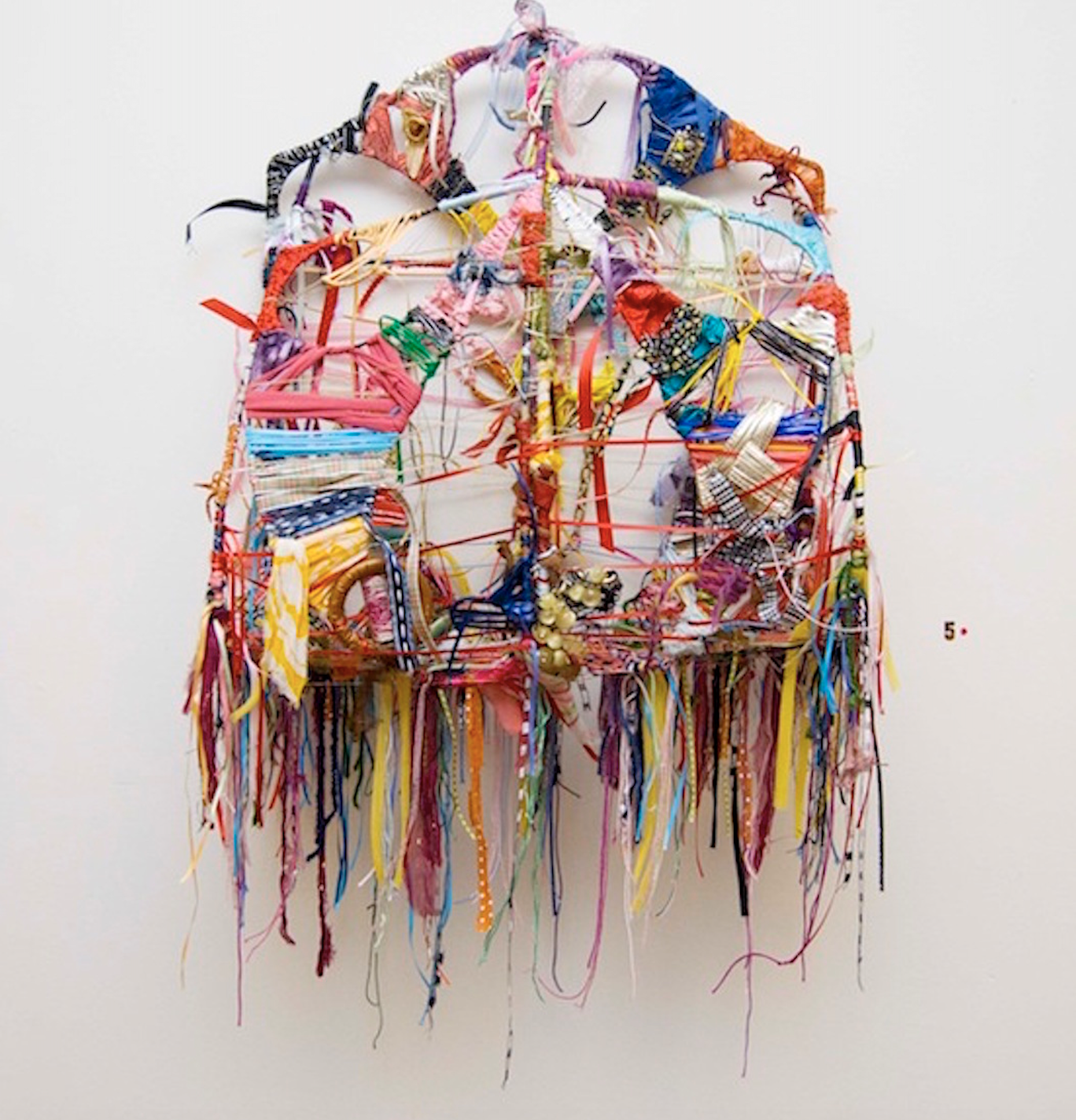
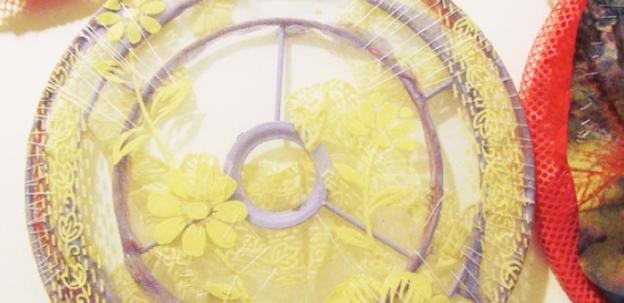
With Every Fiber of My Being is showing through late April at Honfleur Gallery in Southeast. Local artist Amber Robles-Gordon shares dozens of dream catcher-shaped sculptures made from repurposed clothing and other recycled materials.
With Every Fiber of My Being (solo exhibition)
Honfleur Gallery
1241 Good Hope Rd SE,
Washington, DC 20020
http://wamu.org/story/12/03/28/art_beat_with_sean_rameswaram_mar_28/
https://www.amberroblesgordon.com/with-every-fiber-of-my-being-2012-public-art-installation
Honfleur Gallery Presents
With Every Fiber of My Being
by Amber Robles-Gordon
MARCH 9 – APRIL 27 2012
Exhibition Concept:
The phrase With Every Fiber of My Being captures the energy I bring to my creative process, my artwork, and how I relate to life. Fibers, are everywhere in the body, they work in intricately bounded bundles to funnel and connect the life force with information and nutrients that sustain a fully functioning organism1.
I create with every fiber of my being, because I have to and because it brings me joy. Starting at the bundles of axons within my brain, to every hair fiber and through the nerves of my muscles, a network of fibers precisely distributed throughout wants to see, smell, hear, taste, and create, art.
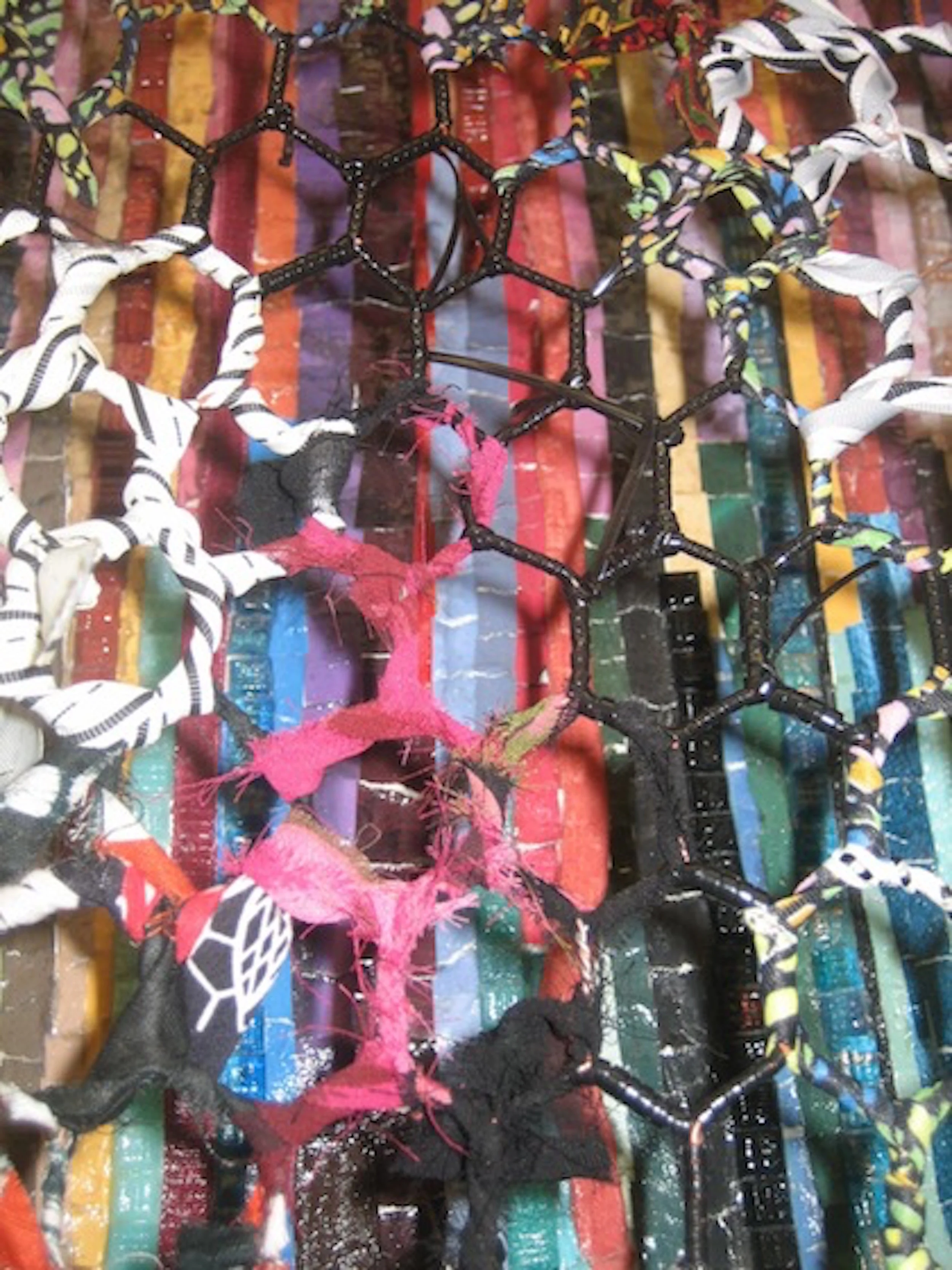
In this series, I am interested in creating a visual representation of the pieces that make up the mental, physical, spiritual and emotional aspects that make one human. I use personal items: parts of old purses, jeans, jackets, and jewelry. As well as stamps, post cards, and old cd cover artwork. Most of these things will be recognizable at first glance. Although, I hope that some items won’t be, at least at first. My intent is show the process of creating and exploring the layers of one’s self, one fiber at time. Then to notice a bundle, and then to see, and identify the life source that flow within each piece of art. Ultimately to the view the whole body artwork as living, breathing organisms.
With Every Fiber of my Being refers to my overall beliefs that creating art is a means of promoting healing. Creating textile work is a very precise and time-consuming task: Every tile, piece of paper, cloth, or stitch of thread must be properly placed in order to craft the intended compacted mosaic of information. Hence, there are very few visual resting points with in a portion of these works. This is intentional, because when do the fibers of our being ever rest.
I will present a body of mixed media on canvas and sculptural textile works. The majority of the artwork will be a combination of found objects and other fiber products sewn or adhered to canvas. Additional works will be sculptural mixed media on canvas forms and mixed media on other found objects.
Honfleur Gallery
1241 Good Hope Road SE
Washington DC 20020
202-365-8392
Hours: Tuesday-Friday 12-5 · Saturdays 11-5
And by appointment
http://www.honfleurgallery.com/
Fibers, Filaments, and Fragments:
Amber Robles-Gordon and the Deconstruction of Self
By Jessica N. Bel
The power of a fiber rests within the nature of its unitary value. The interconnectivity of fibers creates a whole, an object that comes into existence because of the unification of its parts. Memory, personhood, and identity are conflated with the materiality of our things- our fashions, our gadgets, the products we buy, the things we keep and the detritus we discard. Our sense of “being” can be discovered with a thorough examination of what we leave behind. What we value, things we remember, in the modern world, material culture is the conduit to the self. In the meticulously rendered textile and mixed media sculptures of the exhibition “With Every Fiber of My Being”, artist Amber Robles-Gordon destabilizes the power of the fiber in its familiar context of object-hood, by restructuring the parameters with which the viewers come to understand it; fibers and filaments transform into representations of a deeper sense of one’s personal memory and self-constituted identity.
The intentional fragmentation of an object conveys an act of disjuncture- a ripping apart, a shredding of, a tearing up- of familiarity, of stability, of normality. So, what happens when this disjuncture becomes a repetitive act of labor in self-rendering? Binaries explode. Polarization’s collide. Linear understandings of histories become a painterly, disjointed pointillism. Robles-Gordon destabilizes the specificity of our “stuff”- lace adorned dresses, rackets, worn t-shirts, beaded bracelets, badminton balls, etc.- and threads together a reformed sense of self through abstracted amalgamations of material culture. In Air, Water, and Earth. Layers of Self, Robles-Gordon’s mixed media sculpture reshapes disparate parts and fragments into lines of color that coalesce in a circular form. Principles of abstraction are still at play in this sculptural entanglement. Excised from objects disjoined from their past modalities, filaments function as undulating lines of color across the picture plane. Grid-like wires attempt to contain the rotund mass, creating a vivid, precarious sense of tension and fragility. It is in this moment of contained visual clutter and chaos, in which power is reassigned and the accepted meaning or constitution of object-hood is simultaneously bifurcated into its past and re-situated at the limen- a space of betweenness where agency flourishes and categories collapse.
The condition of the postmodern and millennial artist is also situated at the liminal space of particularity, where sampling and fragmentation meet at the axis of hybridity. Furthermore, contemporary practitioners like Egypt-born, New York-based Ghada Amer, as well as South African artists Nicholas Hlobo and Nandipha Mntambo, have taken to the act of immolating textiles and objects to reconstruct notions of gender, sexuality, and personal identity. Through tedious and laborious acts of puncture, stitching, and re-binding fragments, the artist could possibly regain control of representation and the deconstruction of self vis-à-vis the destruction of object-hood. In short, the artist can reconstitute the self through reassigning the meaning and function of parts of things ripped apart and ruptured. This new modality and materiality relies upon the vocabulary of fibers and filaments strung and threaded along to chart new spaces of visual memory and selfhood.Jessica N. Bell
http://www.jessicanbell.com/
30 Americans: Under the Influence
Thursday, November 17, 2011, 6-9 p.m.
Frances and Armand Hammer Auditorium
Corcoran Gallery of Art
Featuring 30 Americans artist John Bankston and presentations by Mazin Abdelhameid, Cedric Baker, Holly Bass, Tom Block, Wesley Clark, Michele Coburn, Lori Crawford, Gary Lockwood/ Freehand Profit, Carrie Nobles, Jamea Richmond-Edwards, and Amber Robles-Gordon
Join us for an evening celebrating local artists and the artists of 30 Americans! Under the Influence will feature eleven artists giving five-minute presentations about their work and the influence one of the artists in 30 Americans has had on their artistic practice. 30 Americans artist John Bankston selected the eleven artists from an open call and will begin the evening with a short presentation about his own work and influences.
Under the Influence highlights the influence of the artists of 30 Americans on the work of up-and-coming artists and invites the audience to engage with artists and their work in an exciting, innovative way. The presentations will be followed by a reception and viewing of 30 Americans.
above images, clockwise from left: Jamea Richmond-Edwards, I am Here (detail), 2009, Ink, acrylic, graphite and collaged paper on canvas; Kerry James Marshall, Untitled (detail), 2009, Acrylic on PVC; Holly Bass, African Futures: DC, 2010, Photo documentation of live performance, photo by Rosina Photography; Kara Walker, Slavery! Slavery! Presenting a GRAND and LIFELIKE Panoramic... (detail), 1997, Cut paper and adhesive on wall
WPA is supported by its members, Board of Directors, invaluable volunteers, and by generous contributions from numerous individuals and the William C. Paley Foundation, The Morris and Gwendolyn Cafritz Foundation, Susan & Dixon Butler, Giselle & Benjamin Huberman, Abramson Family Foundation, Carolyn Alper, Akridge, Arent Fox LLP, The Athena Foundation, Bernstein Family Foundation, Liz & Tim Cullen, Caroline Fawcett & Tom O'Donnell, Sandra & James Fitzpatrick, Carol Brown Goldberg & Henry H. Goldberg, Corri Goldman & Michael Spivey, Haleh Design, Hickok Cole Architects, Betsy Karel, Yvette Kraft, Aimee & Robert Lehrman, Stephanie & Keith Lemer/WellNet Healthcare, Marshfield Associates, Carol & David Pensky, Susan Pillsbury, Heather & Tony Podesta, Richard Seaton & Dr. John Berger, Sidley Austin Foundation, Robert Shields Interiors, TTR Sotheby's International Realty, Vivo Design, Alexia & Roderick von Lipsey, The Washington Post Company, and William Wooby.
Admission is FREE Pre-registration is encouraged.
Presented by the Corcoran Contemporaries and Washington Project for the Arts
‘Options 2011’ combines minimal and conceptual art
By Mark Jenkins
Washington Post
For its 30th annual survey exhibition, “Options 2011,” the Washington Project for the Arts has temporarily claimed a floor of an industrial building near the Convention Center. The space gives the show — curated by Arlington Arts Center Executive Director Stefanie Fedor — room for large, dramatic pieces, as well as the expected painting, photography and video. The work ranges from computer animation and fabric art — including Amber Robles-Gordon’s third gallery showcase of the last six months — to issues of Bittersweet, a new magazine that covers social issues of non-federal D.C.
Many of the 13 artists combine the minimal and the conceptual. John James Anderson combines sculpture made from lumber, nails, screws and carpentry tools, with commentary about hiring immigrant day laborers to work with him. Stewart Watson impales pillows with steel rods to make site-specific, anxiety-ridden “events.” Lisa Dillin’s photographs and sculptures coolly parody corporate environments and mindsets. Heather Boaz renders the commonplace eerie by photographing toy furniture posed on or near body parts such as eyes and knees, as well as less commonly displayed ones.
Among the show’s most engaging work are monumental pieces that mock artistic monumentality. Artemis Herber is showing shell-like forms that look to be made of rusted steel, evoking the sculptural colossuses of Richard Serra and Anthony Caro, along with pillars whose shapes are modeled on fallen trees (although they’re painted a shade of green that’s more redolent of celery than forests). But Herber’s work is made of cardboard; that rusty patina is paint.
Jimmy Miracle also uses inexpensive materials, including plastic carryout food containers. For “Beam,” he stretches filament from wall to floor to simulate a gleaming shaft of light. Like Herber’s “trees,” Miracle’s pieces give everyday stuff a pretense to glory.
‘Delusions of Grandeur’
The Washington Post
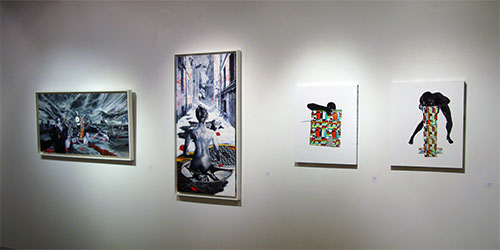
One link between the three young, local artists featured in “Delusions of Grandeur: Ascension” is African American identity. Another is fabric. Amber Robles-Gordon (whose work was reviewed by The Post in July) makes abstract hanging assemblages that feature ribbons and scraps. Jamea Richmond-Edwards does idealized portraits that incorporate textiles, sequins and bows. Shaunte Gates includes bits of cloth and other found materials in allegorical paintings that draw on the tradition of biblically themed medieval and Renaissance canvases, but also sometimes suggest the heroic poses of sci-fi and comic-book characters.
The artists chose the exhibition’s title, and in a statement explain that it refers to “the ‘delusions of grandeur’ that each artist possesses in order to continue progressing . . . in their artwork.” The “ascension” part comes from one of Gates’s paintings, which depict muscular men who are both divine and debased, as likely to sprout wings as to wear to a crown of barbed wire. His figures are rendered realistically, as are some of his settings, notably the urban alley shown in “January 6, 1956: Time Traveler.” But other backdrops are wilder, sometimes verging on abstract expressionism. “May 28, 2004: Lost One” shows a man plunging into a loosely rendered whirlpool, as if diving into the picture plane itself.
Richmond-Edwards’s work is more formal. Faces, penciled in shades of gray, combine African American features with the somber bearing of Greco-Roman sculpture. Many of the countenances are identical, giving the work a paper-doll quality. These visages are surrounded by bright colors and patterns, and adorned with a rose-petal print in various colors. If the result seems a little too fashion-schooled, clothing is a part of cultural identity. Playing dress-up is one way that people define, or redefine, themselves.
Jenkins is a freelance writer.
Artists:
Delusions of Grandeur: Ascension on view through Sept. 16 at Parish Gallery-Georgetown,
1054 31st St. NW, 202-944-2310,
Washington, DC
www.parishgallery.com.www.washingtonpost.com/lifestyle/style/photos-reach-deep-into-go-gos-pocket/2011/08/31/gIQAAaq6uJ_story_1.html
Delusions of Grandeur: Ascension
Press Release
Shaunté Gates, In my dreams II, 2011
Amber Robles-Gordon, Peacock. 2011
Jamea Richmond-Edwards, Revealation, 2011
WASHINGTON, DC- Parish Gallery, in conjunction with the DC Commission on the Arts and Humanities is pleased to present an exhibition by three artists – Shaunté Gates, Jamea Richmond-Edwards and Amber Robles-Gordon, “Delusions of Grandeur: Ascension”. This show will open with a reception from 6:00-8:00 pm on Friday, August 19th, and will run through September 16th, 2011.
This exhibition is the result of an artistic dialog about the “delusions of grandeur” they each possess in order to continue progressing in their careers and most importantly in their artwork. Ascension, the act of rising to an important position or a higher level, is the theme adapted for this current body of work. Each artist presents their individual interpretation of the act of ascending.
Artists Shaunté Gates work combines multiple processes and genres, by taking appropriations and gestures from pop culture and print media which are combined to create elusive narratives. Gate’s works seduce us into an imaginary world of juxtaposition and fantasy, a place when the contradictions of culture and the human psyche are collided. His mixed media paintings capture the beauty in subjects that may appear bleak to the average eye at first glance. Gates ideas are derived from the pain, joy, and the beautiful way everything universally is connected.
Jamea Richmond-Edwards work explores the contradictions of female and cultural identity and with reference to Greek Mythology, African folklore and international fashion. Richmond- Edwards examine how mythologies from ancient times translate into today’s culture and time allegorically. Her figures are empowered by their survivalist adaptation to circumstance. Their sharp features are inspired by both high fashion models and the everyday women in her community.
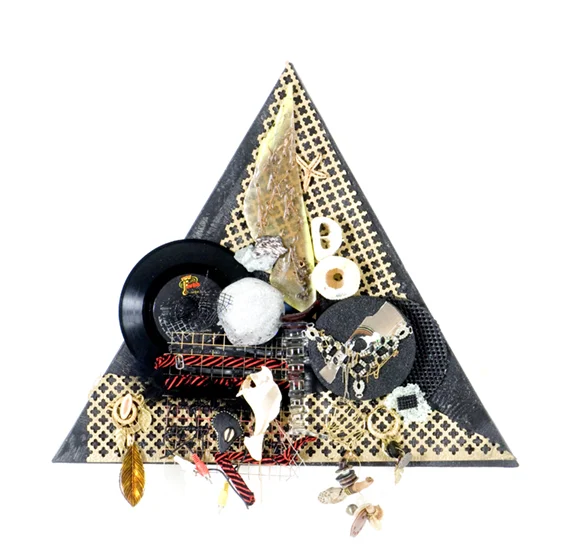
Amber Robles-Gordon mixed media artworks draw upon her journey through motherhood, genealogy, healing, and being alive today. They represent her technical and scholarly growth as an artist, and are supported by her professional development in the Washington, DC area. Her two- and three-dimensional pieces it within an expansive notion of painting and sculptural form. She uses stretched canvas to support an accumulation of media in low- or sharp-relief. These assemblages require a close look to interpret their individual parts. Collectively, these parts form a visual energy comprised of the previous “lives” of the objects, their former owners, and the artist’s hand.
Parish Gallery primarily, but not exclusively, represents contemporary visual artists of significance from Africa and the African Diaspora. In selecting art and artists, Parish Gallery exercises high ethical, curatorial and market selection standards, catering to the spirit of social preservation and regeneration in collecting the art. Parish Gallery is open Tuesday thru Saturday from noon to 6:00 PM or by appointment.
Artists:
Exhibition Dates: August 19- September12, 2011
Opening Reception: August 19, 2011 6-8pm
Parish Gallery
1054 31 Street NW
Washington, D.C. 20007
Young black professionals: The new face of gentrification
Washington Post
Anacostia, a neighborhood once synonymous with crime and violence, now offers yoga studios and chai lattes. Young black professionals are spurring development and gentrification of Ward 8.
Amber Robles-Gordon works in the living room of her Anacostia home. Gordon earned an Master of Fine Arts degree from Howard University.
In addition to making art, Gordon teaches yoga at Anacostia’s Spirit Anacostia Health and Wellness Center. Her commute to work is 10 minutes.
Amber Robles-Gordon displays her work at the Pleasant Plains Workshop, a shared studio space on Georgia Avenue.
Bonnie Jo Mount / The Washington Post
Click here for the full article
Wild Fabric
By Mark Jenkins, The Washington Post
Read MoreArt For Joy, Love and Life
Amber Robles-Gordon: The Sweet Glitter Juju of Life
Amber Robles-Gordon‘s work is deeply personal. Her mixed media paintings and sculptures draw upon her journey through motherhood, genealogy, healing, and being alive today. They represent her technical and scholarly growth as an artist, and are inspired by her professional development in the Washington, DC area. A recent graduate of the Howard University MFA Program (2010), Robles-Gordon is a board member of Black Artists of DC (BADC), and takes part in a diverse and multigenerational arts community. She is also an arts advocate who participates in several cross-cultural and cross-town initiatives that characterize Washington, DC‘s history of individual and grassroots organizational support for artists. Robles-Gordon has expressed that this rigorous and nurturing technical and conceptual dialogue has enriched her artistic process and her life; it has affected her approach to materials, techniques, and her vision as an artist. She notes the influence of many artists who have inspired her to see art-making as a profound engagement with oneself and the world.
Her two- and three-dimensional pieces fit within an expansive notion of painting and sculptural form. She uses wood or painted, stretched canvas, or chicken wire to support an accumulation of media in low- or sharp-relief. These assemblages require a close look to interpret their individual parts. Collectively, each object contributes to the palpable energy of the overall piece—hinting at their previous functions and the ?lives? of their former owners—configured by the artist‘s hands.
Robles-Gordon gathers and reshapes the sweet glitter juju of life into her work. Individual moments, personal vignettes, and more universal themes are equally woven into it. She examines spirituality, the phenomena of childbirth and motherhood, and the assignment of value to every little thing. She considers the blessings and burdens of femininity, and what it means to be a woman. She recycles fragments of garments, handbags, and accessories to engage the ways that these vanity objects—often used to define beauty—are also traps. She explores various metaphysical systems as a source of inspiration after an accident gave her the opportunity to test her faith and healing ability. Glitter-coated streams of paint add sparkle and shine to a range of discarded or thrifted objects. She breaks them down and reassembles them into collaged arrangements that are influenced by artists such as Romare Bearden, James Brown, Francine Haskins, Frida Kahlo, Georges Seurat, Frank Smith, and Alma Thomas. Robles-Gordon fuses varied influences into compositions that balance blank space, color, and hyper-materiality. She creates a subtle tension, and the possibility of opposing readings in her placement of assemblaged elements amidst dripping paint—which may represent the lyrical expression of painful experiences. These works belong to the series Milked, and simulate the outstretched wings of birds-in-flight against blue or yellow skies, butterflies, or the seductive curves of women‘s undergarments. Her affinity for lacy details, gloves, doilies, slips, and purses consist of a range of past and present accessories and small objects of home décor. She chooses from things—her own and others‘—to pull apart and reform; to give new life, and to scatter between various works like a sprinkling of fairy dust.
She plays with notions of masculine and feminine energy (as objectified) to address distinctions between the admiration of beauty, and its ethereal source or essence. Found dragonflies, dolls, deconstructed fan parts, remote controls, billiard balls, trophies, curling irons, hood ornaments, handles, and sparkly red children‘s maryjanes refer to male/female dynamics, and popular culture references, like fairy princesses, Oz, and what it may mean to be “?behind the eight ball.”
Robles-Gordon‘s collage sensibilities were influenced by artist-activist Romare Bearden (1901– 1988). Bearden‘s prolific work in collage shaped a visual narrative style that conveyed a palpable sense of 20th-century black life in America. Robles-Gordon states: I identify with Bearden‘s collages because I employ similar techniques and processes of cutting, pasting, reconstructing forms, faces, and concepts from photographs, magazines, and other paper sources to convey a message. I interpret his method and collages as a form of visual journaling. Through making collages, I have established a relationship between texture, symmetry, harmony, and compositional balance.
Inspired by Mexican surrealist, Frida Kahlo (1907-1954), Robles-Gordon considers Kahlo‘s ability to overcome tragedy, illness, and grief as an expression of her strength, and its role as a source for her paintings. As one of the best-known women artists of the early 20th-century, Kahlo used life‘s obstacles as a way to hone and articulate her artistic voice:
Kahlo was a master at rendering her dreams, pain, and innermost thoughts and feelings. I am inspired by her personal connection to her art and its role within her life. Further, her artistic treatment of women and the depiction of her traumatic life have influenced my desire to create works reflective of my experiences as a woman.
In Bearden and Kahlo, Robles-Gordon discovered the arts to be a meaningful ways to convey personal narratives and relevant sociopolitical issues. She admires each artist‘s work as an embodiment of cultural pride, and as a means to stake a position on identity, subjugation, and giving voice to the voiceless. By combining personal elements with timeless and universal themes, Robles-Gordon uses collage, and non-traditional painterly devices to examine contemporary social issues: accumulation and waste, beauty and femininity, motherhood, spirituality, and the nonsensical or unexplainable juxtapositions that characterize daily existence.
In the work of pioneering abstract painter Alma Thomas (1891-1978), Robles-Gordon reflects upon Thomas‘s interpretation of primary color schemes, geometry, and composition. From French artist Georges Seurat‘s (1859-1891), she learned about the process of optical color mixing. Robles-Gordon states:
Thomas left small spaces of white canvas in between her brush strokes, creating the appearance of mosaics or stained glasswork.... [By studying this,] I began to evaluate the value, purpose, and aesthetic aspects of my art.... [Seurat] used white space to enhance the perception of color. He created a technique called ‘pointillism,‘ in which an image is rendered using tiny dots of primary and secondary colors. When the image is viewed from afar, the eye fuses the colors and creates intermediate colors.
She applied these concepts of color and technique to a body of untitled works in the series, Identification of the Matrix Grid. Begun in 2004, these pieces evolved from an artistic inquiry that used grid structures to create multi-colored layered matrices based on squares or rectangles. She cites Thomas and Seurat as sources for her grids: In my early works, I used torn, colored paper to create figurative paper mosaic compositions. Ripping the paper revealed its white fiber pulp, and provided areas of white space between each portion of color. Many of my paper mosaics appear from afar to look like Thomas‘s paintings until you come closer and see the texture of overlapping paper. The manner in which Thomas and Seurat used color and white space has influenced the way I visually perceive color and has informed my placement of color in the majority of these works.
As a member of BADC, Robles-Gordon has positioned her art as a part of an artist community that values African-inspired techniques and philosophies as a tool for exploring personal and artistic awareness. Her series, Cosmic Black, was created for the 2009 BADC exhibition, The Black Exhibit. Like the 20th-century exhibitions devoted to the color black as an expression of the sociopolitical issues associated with blackness, the focus of this show was to reinforce principles such as ?black is beautiful? and the positive attributes of the color.
Within BADC, fiber and textile artist James Brown, and mixed-media artist Francine Haskins have inspired Robles-Gordon‘s professional development. In Brown and Haskins, Robles- Gordon appreciates how each artist has contributed to an expansive understanding of the possibilities of textiles, fiber arts, and found objects in her own work. She also sees the work of artist, professor, and AfriCOBRA member, Frank Smith as an inspiration for developing mixed- media canvases and sculptures that combine sewing and painting. The physicality of Smith‘s work comes from layers of painted, cross-hatched squares, stamps, or other materials featured in kinetic arrangements. The wall-mounted draped textiles in her series, Heal Thyself Series, pay homage to Smith‘s quilted paintings, his use of space and brilliant palettes. Robles-Gordon says of these three artists:
In their own individual styles and techniques, Brown, Haskins, and Smith create two- dimensional figurative and abstracted compositions that appear to have varying planes of visual movement and rhythm that document, explore, and celebrate African and African American history and culture. Through exposure to their works and my relationships with Brown, Haskins, and Smith, they have supported and challenged me to continue my exploration of textiles, cloth, and sewing and have strongly encouraged my desire to go beyond the conventional practice of presenting works in frames.
In Robles-Gordon‘s recent work, familiar elements—straps, curling irons, gloves, shoes, dragonflies, and fans—take on new meanings and forms on her characteristically canvas, chicken wire, or wooden supports. The compositional possibilities are as limitless as her stockpile of materials and their conceptual associations. As the work moves this direction, her structural sensibilities—that once relied on grids and matrices—are being transformed into less regimented, more three-dimensional, and visually-interactive compositions. She states:
Though the matrix is still at the core of most of my compositions, the works are no longer defined by a grid format or flat surface. Taking away the boundaries of traditional framing encouraged me to allow the materials, colors, and energy to hang, flow, and ?leap off? of flat canvas, which ultimately leads to the shift from two-dimensional to three-dimensional works.
These developing concepts are best revealed in the Heal Thyself Series, the Chicken Wire Series, and At the Altar. Heal Thyself consists of wall hangings made from textiles and other media mounted on canvas. The Chicken Wire Series is comprised of mixed media works woven through and sculpted around a chicken wire base. At the Altar is composed of folded and draped canvases that are brightly painted and adorned with an array of found objects from plastic fruit to things associated with childbirth and maternity.
Tosha Grantham is an artist, writer, and independent curator. She is completing a PhD in African Diaspora Art History at the University of Maryland College Park.
Amber Robles-Gordon is a mixed media artist who lives in Washington, DC.
Upcoming Exhibitions:
Wired (solo exhibition)
(June 17 – July 17, 2011)
Pleasant Plains Workshop
2608 Georgia Avenue, NW,
Washington, DC 20009
Opening Reception: June 18, 2011 from 6-9 pm
Curator:
Kristina Bilonik Tel: (202) 415-1466
Website: www.pleasantplains.com
Delusions of Grandeur (group exhibition)
(July 8 – August 30, 2011)
Featured Artists: Shaunte Gates, Jamea Richmond Edwards and Amber Robles-Gordon)
Commissioned exhibition by the DC Commission on the Arts and Humanities.
Mandarin Oriental Hotel
Exhibition Space
1330 Maryland Avenue, SW,
Washington, DC 20024
Opens: July 8, 2011
Contact:
Jamea Richmond-Edwards Tel: (571) 288-1086
Pen Arts presents:
Lace (Solo Exhibition)
(October 31 - November 5)
Robles-Gordon will be the keynote speaker for the DC Branch' of The National League of American Pen Women November meeting.
National Headquarters Pen Arts Building
1300 Seventeenth Street N.W.
Washington, D.C. 20036-1973
Opening Reception: To be announced
Contact: (202) 785-1997
Website: www.americanpenwomen.org
Amber Robles-Gordon's Solo Exhibition WIRED at Pleasant Plains
Curated by Kristina Bilonick
June 18 - July 16, 2011 Opening Reception: Sat. June 18, 6-9pm
Pleasant Plains Workshop is pleased to present a solo project, Wired, by artist, Amber Robles-Gordon. Robles-Gordon recently received her MFA from Howard University and works in mixed media, textile, photography, and painting.
For this exhibition, Robles-Gordon has transformed found objects with ribbons, gimp, fabric, wire and other materials to create exciting wall works that explore patterns, color and material. The works also speak to her cultural identity which is influenced by Caribbean, Latin-American, and African-American cultures.
Please join us for the opening reception on June 18th, from 6-9 PM.
Pleasant Plains Workshop
2608 Georgia Avenue NW
Washington, DC 20001
Amber Robles-Gordon, Lisa Gold
A Group Exhibition of Recent Works by BADC and WPA Member Artists opens at Hillyer Art Space in Washington, D.C.
A GROUP EXHIBITION, titled "Process: Reaffirmation," presenting recent works by Black Artists of D.C. (BADC) and Washington Project for the Arts (WPA) member artists opened at Hillyer Art Space on Friday evening, April 1.
The exhibition, which is curated by Gina Marie Lewis, focuses on and reaffirms the processes of artists within their studios, honors the personal philosophies, practices, and vocabularies of eight artists and attempts to explore a visual dialogue between their works.
Read the full article: www.swedishscene.com/2011/04/a-group-exhibition-of-recent-w.html
Works by artist Victor Ekpuk (wall) and Joel D’Orazio (sculpture)
By Daniel Brooking
April 2011
Process: Reaffirmation
Presented by Hillyer Art Space in collaboration with Washington Project for the Arts, and Black Artists of D.C.
Curated by Gina Marie Lewis, Process: Reaffirmation focused on and reaffirmed the processes of artists within their studios. The exhibition honored the personal philosophies, practices, and vocabularies of eight artists and attempted to explore a visual dialogue between their works.
The artists selected for this exhibition include Anne Bouie, Daniel Brookings, Joel D’Orazio, Victor Ekpuk, Corwin Levi, Barbara Liotta, Adrienne Mills, and Cleve Overton. In some cases, the relationships between their works may be obvious, and other instances invite the viewer to inquire and explore the relationships from their own point of view. As a starting point, such aspects as linear relationships, creation of new processes, innovative use of materials, the making of marks, and defining space were most apparent during the curatorial process.
https://athillyer.org/portfolio/hillyer-art-space-washington-project-for-the-arts-and-black-artists-of-dc/
Amber Robles-Gordon's "Cosmic Black 2" is one of the works on display at the Corner Store Gallery"
Reclaiming Those Negative Images, Roll Call Inc.
Reclaiming Those Negative Images
Feb. 16, 2010
By Kristin Coyner
Roll Call Staff
Oftentimes, there’s more talent under our noses than we realize. That’s certainly true when it comes to “Mixed Media Reflections,” a new gallery at the Corner Store, a multiuse arts space at 900 South Carolina Ave. SE.
Alec Simpson and Tray Patterson, both Washington artists, are acting co-curators for the gallery. Simpson, who often deals in abstract art, is one of 12 Washington-area African-American artists whose works are on display.
The idea for the show started rather simply, over a meal between Patterson and Simpson.
“We just got together over lunch one day and decided to put on a show last fall,” Simpson said.
In light of Simpson’s own success last year with a one-man show at the Corner Store — Simpson sold all his small works in “Flashback/Fast Forward” — it followed that the planners focused on small works. “In view of what people were saying about the economy, we just thought that maybe we’d stick with that concept,” Simpson said. All works at the gallery are on sale for $240 to $1,000.
“We didn’t have any idea how many artists there would be in it, how many pieces there were going to be, how big they were going to be, but we did know that we didn’t want them to be priced out of the market,” Simpson said. With the theme of Black History Month, the mixed media motif pulls everything together.
Stepping into the front room of the Corner Store, where the works are on display, is a treat. The front space is warm and beautiful, with colored walls and exposed brick. The artists’ works are accentuated by the lack of a modern white-walled space.
As for the works, some pieces use found objects, others use silk, some are on ceramic and still others are on paper. One artist, Alonzo Davis, even uses bamboo poles and fabrics.
The show is a mixture of materials and artistic styles, but the works manage to tie to the theme of Black History Month in a compelling way. All the artists in some way touch on the African diaspora, from clear visual images of brutality to parodies of mockery of black personhood to abstract works that offer the chance to create new meaning.
Works by Aziza Gibson Hunter, “Prayers to Haiti,” were a late addition to the show. Gibson Hunter composed a series that incorporates elements of African cloth and other found objects, including Haitian money, to offer homage to the small island nation devastated by an earthquake a month ago. Gibson Hunter intends to donate all proceeds to Doctors Without Borders.
One wall in particular seems to deal most directly with ancestral issues and imagery, which are most readily visualized through Anne Bouie’s “Ancestry 5,” “Ancestry 6” and “Ancestry 8.” Bouie incorporates Aunt Jemima and Uncle Tom figures but creates new meaning with the images.
And that, to Simpson, underscores a driving theme of the entire show. “It’s a matter of transformation, transforming it into something different and new,” he said. “It’s about seeing new things in what wasn’t necessarily good.”
Patterson added: “It’s also reclaiming it. Reclaiming a negative stereotype that was out there to turn it.” The breadth of artistic techniques that individual artists have perfected is another striking aspect of the show. For example, artist Juliette Madison uses mixed media clay pieces by transferring images onto clay using ink that she created.
Madison’s “Lord Why” displays the technique with a veritable gut punch. The work shows the archival photograph of a lynched woman who, along with her son, was accused of theft. The significance of the story is made clear with the phrase “Lord why is my seed in the wind?” emblazoned on top of the image.
“African-American artists don’t feel backed into a corner,” Simpson said. “They create and let the chips fall where they may. There’s an authenticity to what you see.”
The exhibit, which opened Feb. 5, will run until the 28th. The Corner Store doubles as an art space and home to Kris Swanson, a sculptor who for the past eight years has welcomed any variety of art events into her home, including author readings, CD release parties and theatrical performances.
Because the space functions as a home, the Corner Store isn’t open for regular hours. However, Swanson makes appointments at webmaster@cornerstorearts.org or 202-544-5807.
The Corner Store Gallery
900 South Carolina Avenue, SE
Washington, DC 20003
(202) 544-5807
www.cornerstorearts.org
Metro: Within 2 blocks of the Eastern Market Station
Orange and Blue Lines
2010 © Roll Call Inc. All rights reserved.