Hyperallergic

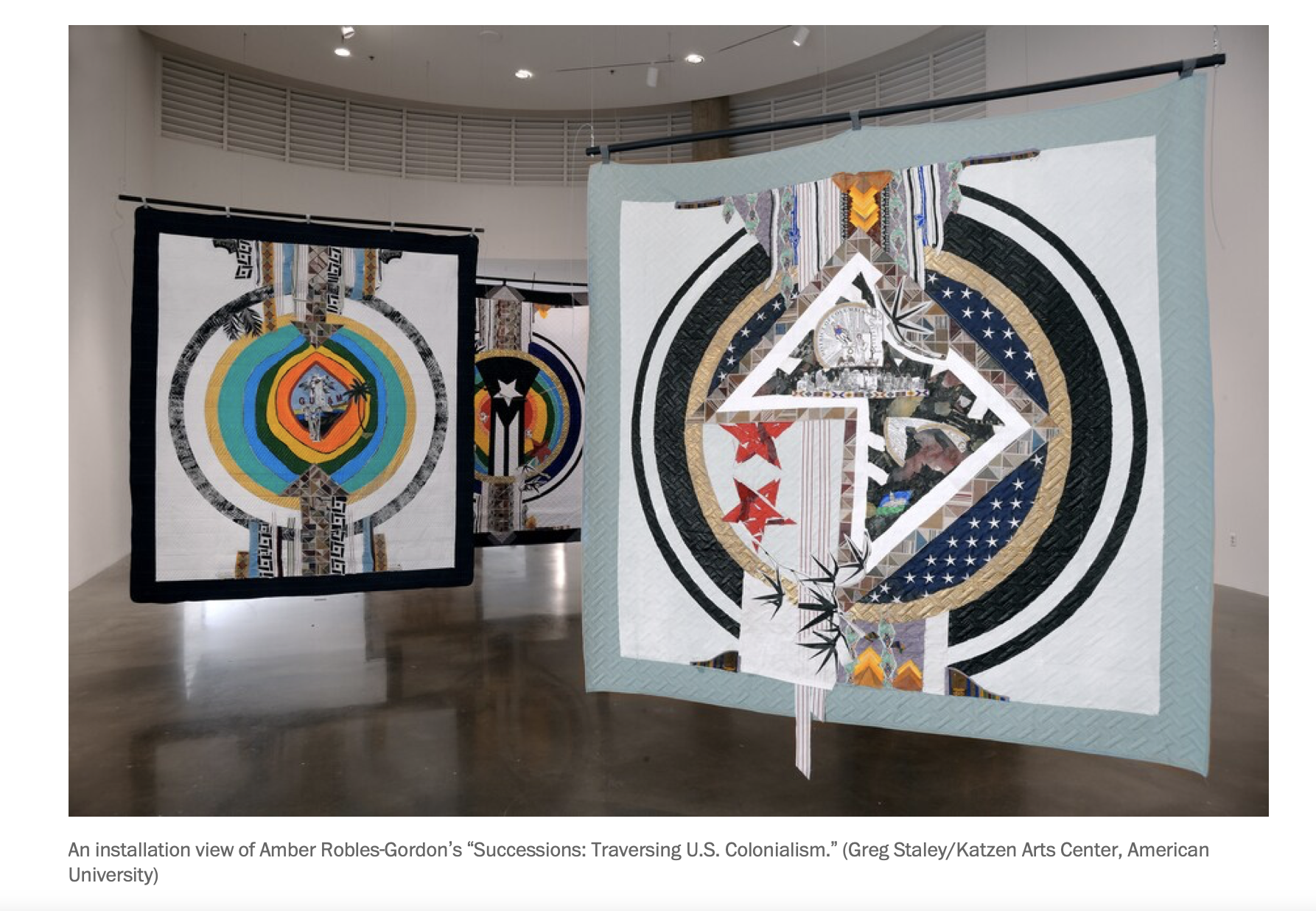
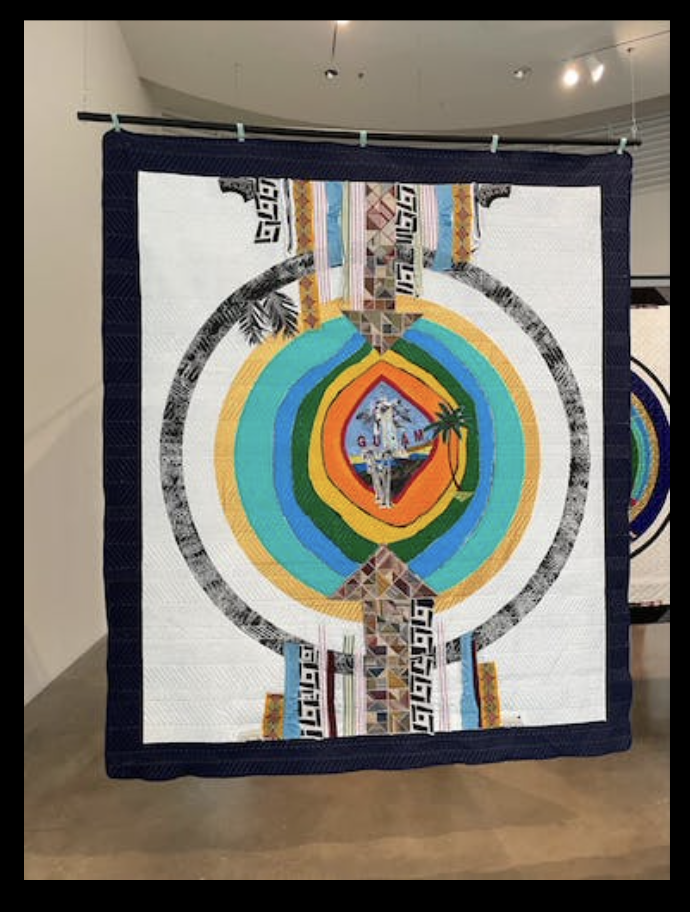
Washington, DC — Seven “flags” hang in Amber Robles-Gordon’s show at the American University Museum: one for each of the five unincorporated United States territories in the Caribbean, one for the District of Columbia, and one to signify the artist’s place in between those locales.

Read More

Bmore Art

People, food, and horticulture are among the things that move. Amber Robles-Gordon’s use of the Ficus Elastica is part of the symbology that reverberates throughout her exhibition, Successions: Traversing US Colonialism, on view at the American University Museum at the Katzen Arts Center in Washington, DC, through December 12, 2021. The Ficus Elastica—colloquially known as the rubber tree—has its roots in South Asia, though it was later nativized in the West Indies through the rubber trade. Dear reader, among your houseplants you are likely to find the genus of the rubber plant.

Read More

“Successions: Traversing U.S. Colonialism” on Exhibit at American University Museum

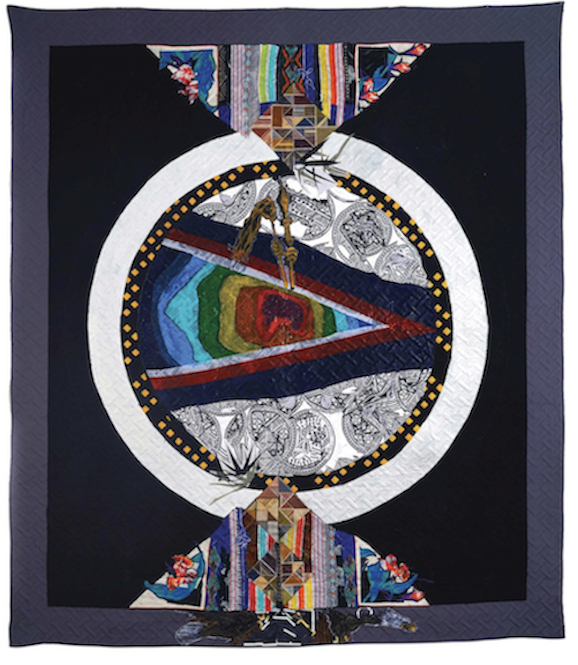
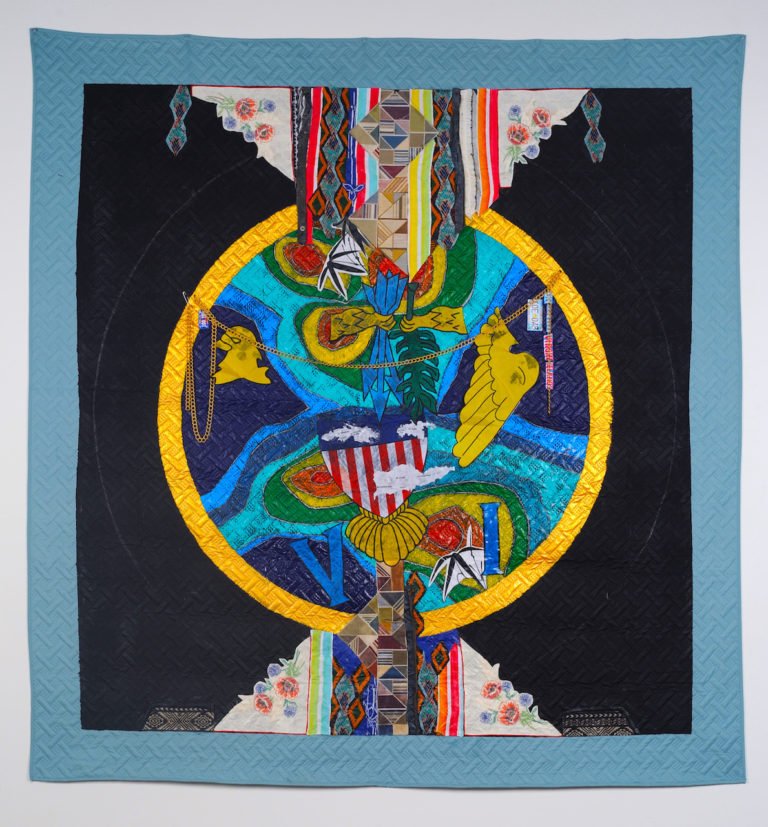
“USVI Spiritual, Moko Jumbie: Walk Tall and Heal Forward” Mixed Media on quilt, (back of “USVI Political”) 2021 (Courtesy of Amber Robles-Gordon)

Amber Robles-Gordon’s “Successions: Traversing U.S. Colonialism” has a dual purpose. It consists of her “Place of Birth and Breath” solo exhibit viewed first in her native Puerto Rico in 2020, and it has evolved into a component exhibit, which is an exploration of the historical underpinnings of U.S. Colonialism.

Robles-Gordon is a mixed media visual artist whose solo exhibit at the American University Museum opened in August and can be viewed Fridays through Sundays, from 1 p.m. to 4 p.m. until Dec. 12.

What began as a quest, “to heal my five-year-old self: to empower her to fight for herself, her language and her culture,” the exhibition took on “the intersections of language, culture, institutional racism, anti-blackness and their immeasurable impact within the U.S. territories,” said Robles-Gordon.

A native-born Puerto Rican with family from St. Thomas, St. John, Puerto Rico, Tortola and Antigua, Robles-Gordon created a visual discussion of the historical and political plight and resilience of the District of Columbia, where she resides, and the five U.S. territories that her two-sided quilts represent. They embody the artist’s creation of a political study of the territories and on the reverse side, a spiritual and cultural study.

Robles-Gordon’s early love of art and creativity moved her delight with fabrics, quilts and found objects to the discovery that these could and would be her artistic narrative.

A writer uses words to express; my medium of expression is my art, she said. “I use a myriad of materials according to what I’m trying to convey in a particular project or a particular narrative. It’s very essential that I match up with what I’m trying to convey,” Robles-Gorden said.

The decision to dismiss her native language, Spanish, came as a result of the teasing and ridicule Robles-Gordon experienced as a five-year-old kindergartener at her school in Arlington, Virginia, far away from her birthplace of Puerto Rico. She did not look like a Latina girl that was familiar to her classmates, and hence developed the bullying of this little brown-skinned girl.

In time, Robles-Gordon realized the importance of embracing her language and her culture and the need to find ways to heal through her research and employ it through her art as the medium on her journey to healing.

Speaking of her years as an artist, Robles-Gordon’s journey toward healing is what she brings creatively in her discoveries about U.S. Colonialism, “I think that it’s a beginning. There’s not an end to my journey. It’s a part of my journey. I think I’ve done a hell of a job in starting it. I actually feel proud about it in my own life. That feels good,” she said.

Robles-Gordon made the universe know how important this part of her journey is. “I think I’ve done that,” she said.

“Successions: Traversing U.S. Colonialism” exhibits the component of Robles-Gordon’s body of work containing six quilts embodying the Commonwealth of the District of Columbia, and the five U.S. territories of Guam, the U.S. Virgin Islands, Puerto Rico, the Northern Mariana Islands and American Samoa. The other component, “Place of Birth and Breath,” is the collage on canvas series created in 2020 and exhibited at the Universidad del Sagrado Corazon, (University of the Sacred Heart) in Puerto Rico.

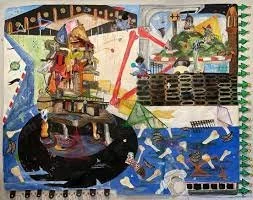
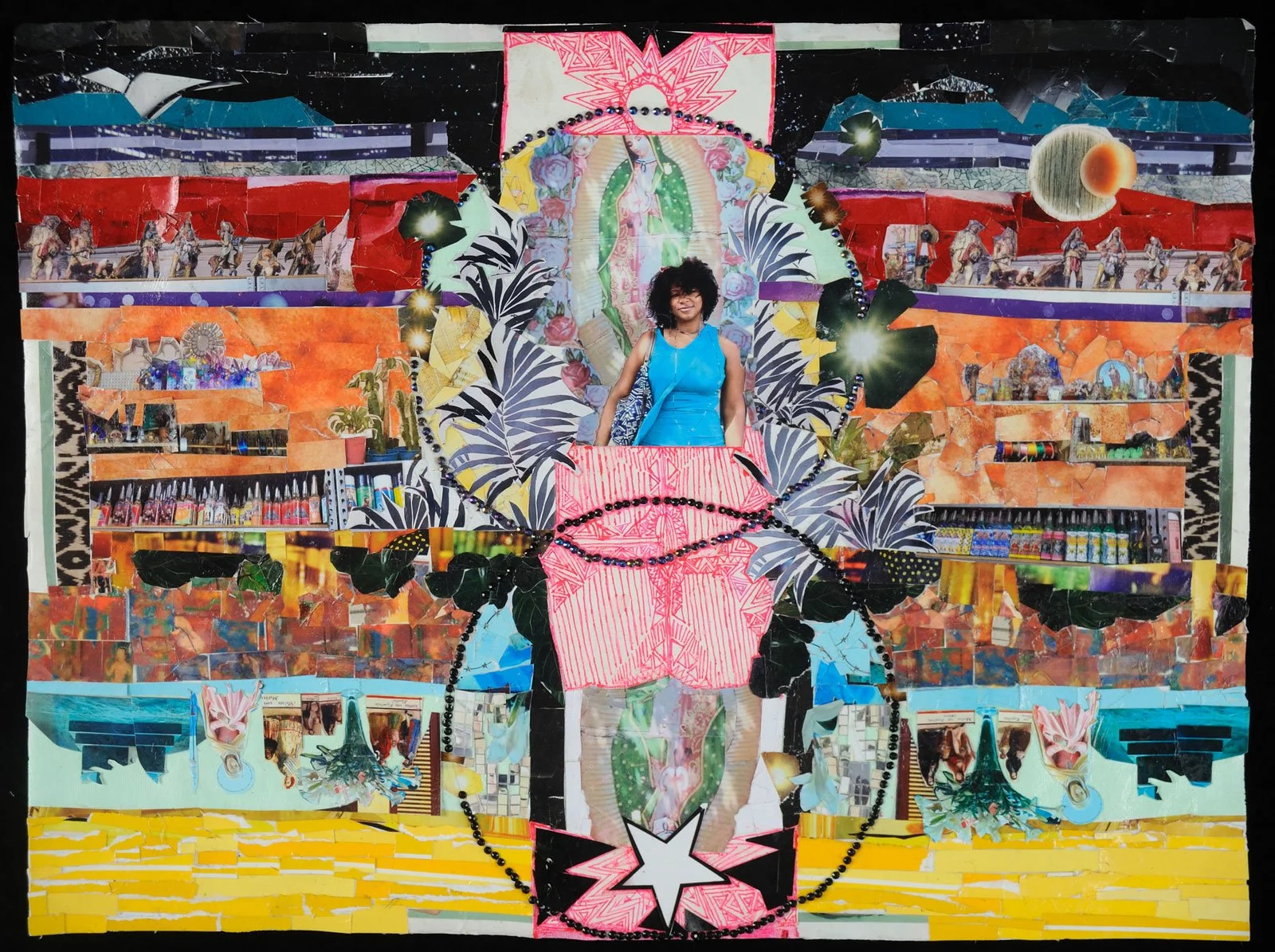
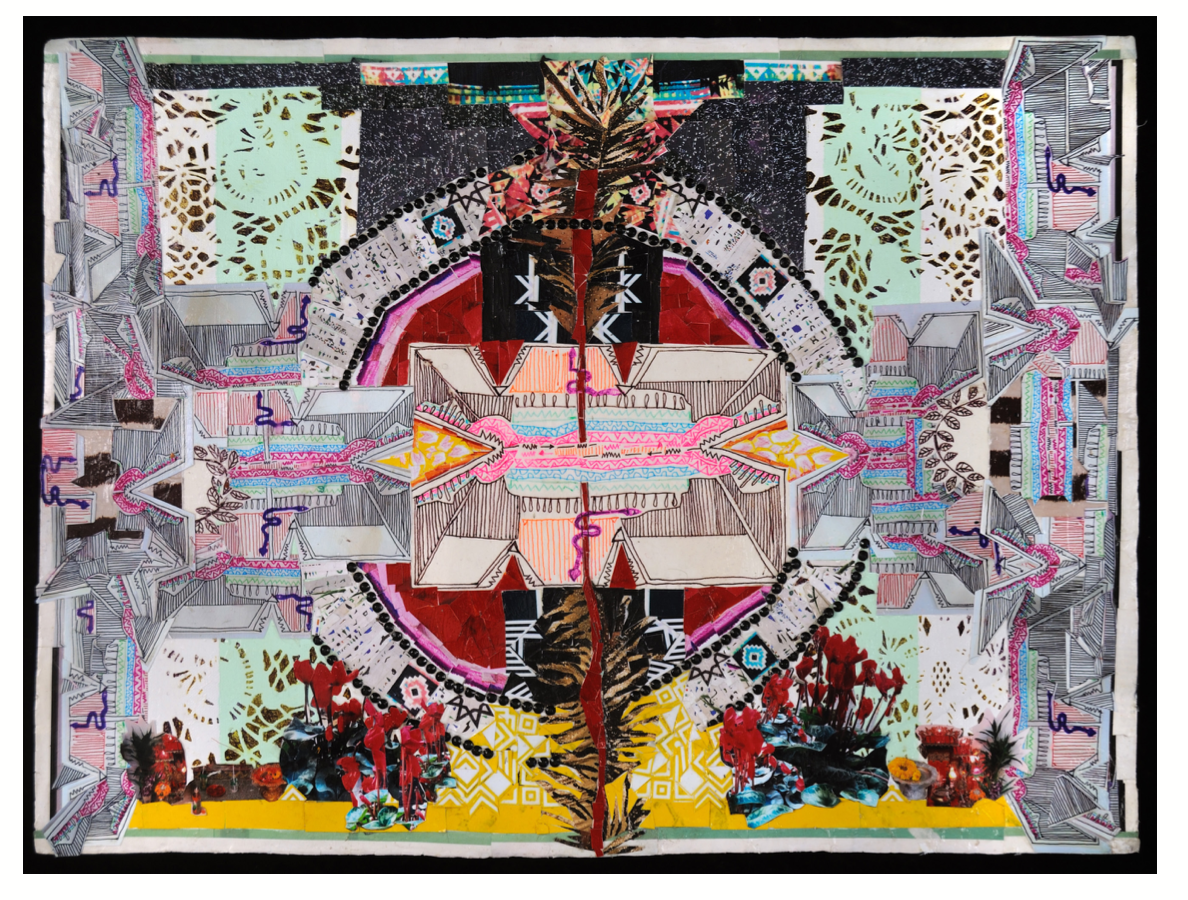
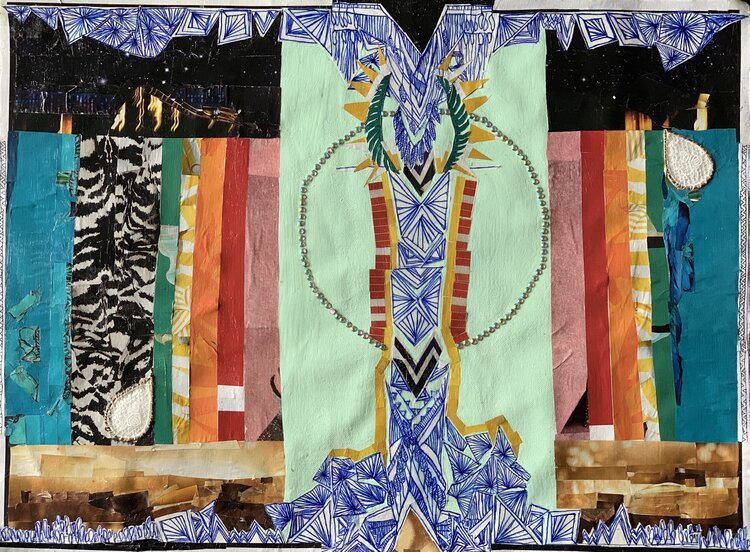
“Place of Birth and Breath” is Robles-Gordon’s 10 mixed-media collage canvases that are a result of the visit with her mother to Puerto Rico where both women recaptured their roots, one of her childhood home, and the other of her birthplace.


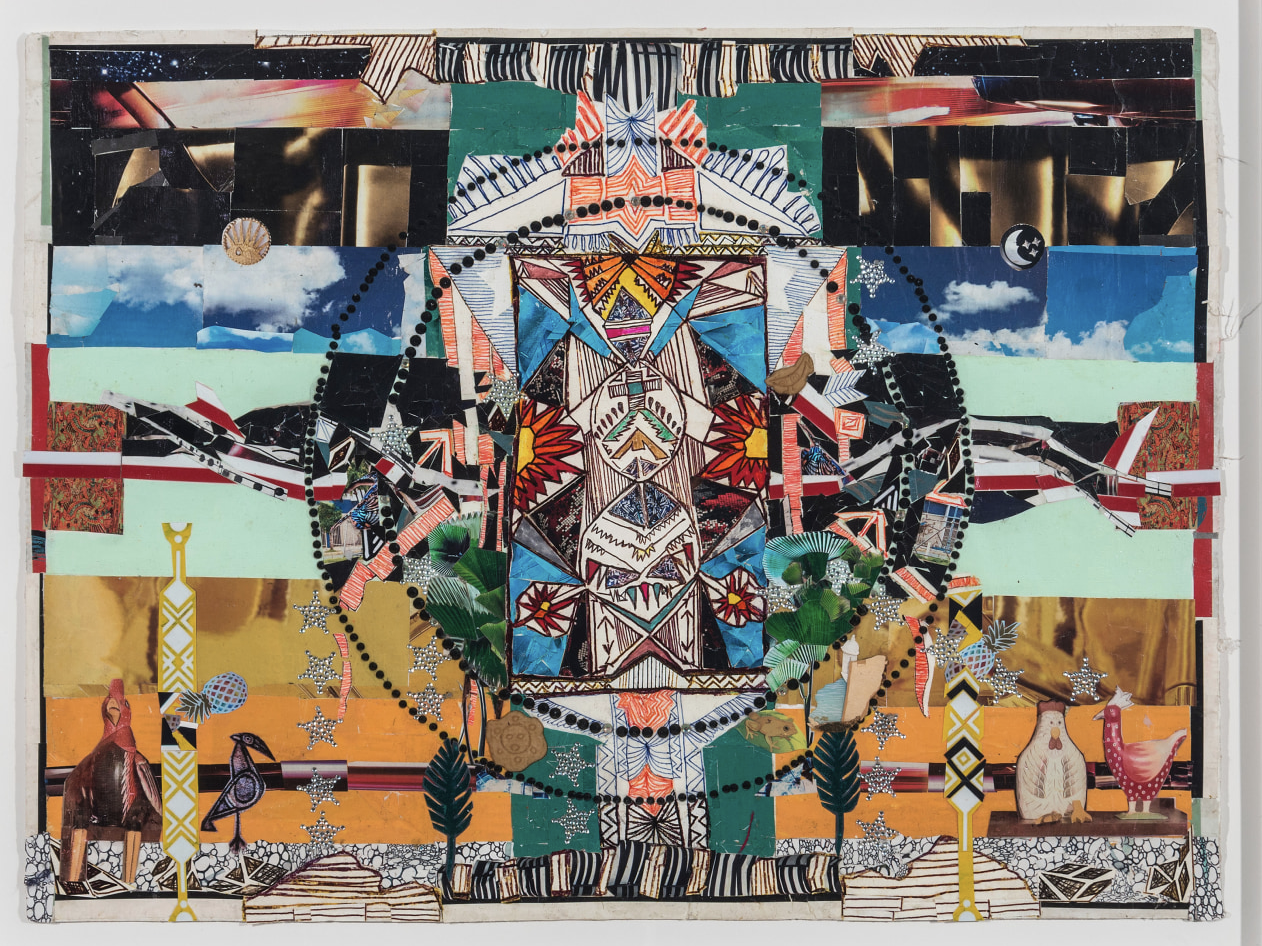
“Isla del Encanto” collage, 18×24, 2020. (Courtesy of Amber Robles-Gordon)

A foundational symbology of the “Birth and Breath” body of work is the rubber tree that grows on the campus of the University of the Sacred Heart, which Robles-Gordon was introduced to while in Puerto Rico. “This tree appeared to be a literal fusion of past, present and future states of creation or sustaining an ecosystem. Throughout the series, are abstracted representations of the rubber tree – an entanglement of strong roots – as an example of its resiliency this tree most recently stood-fast to its native soil while 155 mph winds battered the campus,” Robles-Gordon noted.

Robles-Gordon shares her intricate ideas of how she layered her work depicting and interpreting the transitions of day to night and night to day. She relates to three major ethnic/racial groups – the Taino, the Spaniards and Africans, the stranglehold of the United States and the impact of the Caribbean Sea with its threat of hurricanes, scorching summer heat and lush landscapes.

Successions: Traversing U.S. Colonialism at American University exhibition closes on Dec. 12. The journey continues. The conversation continues. The healing continues.

See Amber Robles-Gordon’s website here..

Museums Review In the galleries: Artist’s works criss-cross the paths of U.S. colonialism

Museums Review In the galleries: Artist’s works criss-cross the paths of U.S. colonialism

Residents of D.C. are used to seeing the place as an almost-state, much like Maryland or Wyoming, yet not quite. Amber Robles-Gordon, a longtime Washingtonian who was born in Puerto Rico, has a different take. Her American University Museum show, “Successions: Traversing U.S. Colonialism,” groups D.C. with her birthplace and four other inhabited territories: Guam, the U.S. Virgin Islands, American Samoa and the Northern Mariana Islands. She represents these disenfranchised territories on two-sided quilted banners, one face for “political” and the other for “spiritual.”

Read More

Examining Black Existentialism through the Curatorial Lens

Join our panelists as they journey through texts by Octavia Butler and bell Hooks, Parable of the Sower and Salvation: Black People and Love. They will explore and discuss parallels and intersections between themes posited in these seminal texts and their own individual curatorial/artistic practices.

Read More

Weaving Identity: A Conversation on Textile Practice in the 21 st Century

This panel explores the power of contemporary visual art through the practices of the Diaspora’s most preeminent artists who innovate through the use of textiles. The panel will also share how their works are impacted by black existential thought. Followed by Cocktails and Light Bites Vranken Pommery and Red Rooster.

Read More

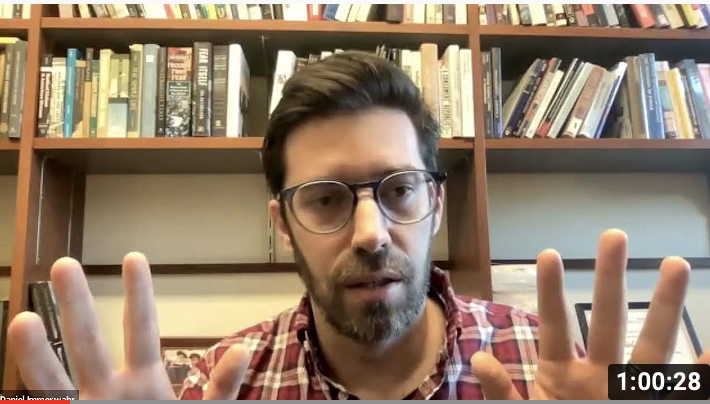
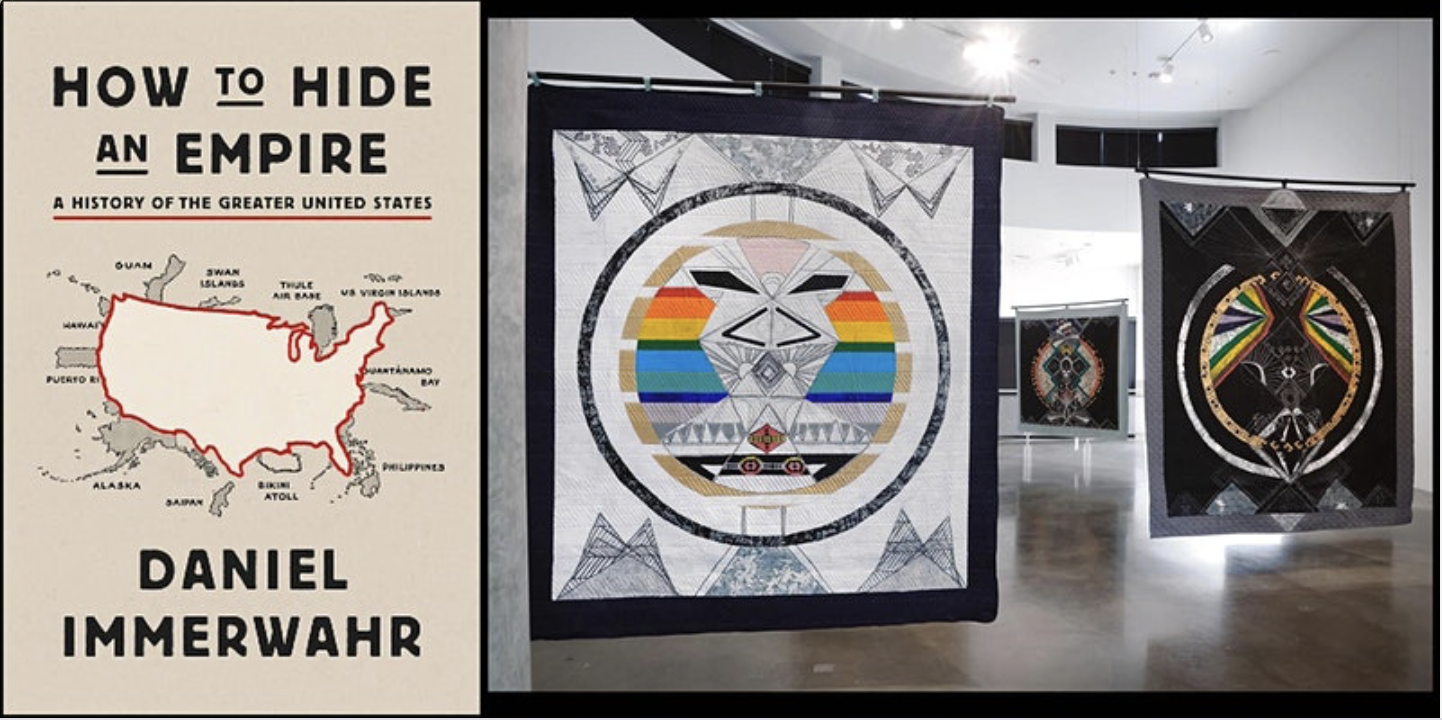
Successions video of conversation, between artist Amber Robles-Gordon and author Daniel Immerwahr

Successions video of conversation, between artist Amber Robles-Gordon and author Daniel Immerwahr

This candid conversation featured Daniel Immerwahr, author of "How to Hide an Empire: A History of the Greater United States" and visual artist Amber Robles-Gordon. They spoke regarding the threads of intersection between his book and her current solo exhibition at the American University

Read More

Successions: Traversing US Colonialism Listed on BmoreArt’s Picks: November 2-8

This Week: John Oliver’s hand-picked AVAM exhibition, A Passion for Collecting: The Vision of Louis Allan Ford at Galerie Myrtis, Zoë Charlton in conversation presented by Cade Gallery, Bridget Z. Sullivan at Hamilton Gallery, Jonna McKone/Keep A-Knockin’/Noah Breuer/Solo Lab 5 opening at VisArts, Amber Robles-Gordon at the Katzen Art Center, Katie Pumphrey: Night Swim at Project 1628, The Guardians presented by the Peale at Carroll Mansion, and more … plus Maryland Art Place UNDER $500 2021 and other featured calls for entry.

Read More

REVIEW: A deeper look into two AU Museum art exhibits

‘The Art of Reimagining Scientific Discovery’ and ‘Traversing US Colonialism’ bring spectators into new perspectives

By Olivia Barclay / Monday, October 25, 2021

The American University Museum at the Katzen Arts Center opened in August and currently features five exhibits, all with very different themes. 

The museum features a variety of exhibits every season that open viewers up to a whole new world of art. “Reveal: The Art of Reimagining Scientific Discovery” and “Successions: Traversing US Colonialism” are two of the exhibits that introduce viewers to new perspectives on the world we live in today. 

“The Art of Reimagining Scientific Discovery” by Rebecca Kamen

“Reveal: The Art of Reimagining Scientific Discovery” by Rebecca Kamen uses a mixture of models and paintings. Kamen focuses on rocks, cells, cell processes and viruses in her exhibit. 

The rock models are made out of mylar and are painted with acrylic paint, making the viewer look at different types of rocks in a new way. By making these models colorful, Kamen hopes to demonstrate the importance of rocks in an interesting way. 

She also includes cell processes such as cell division in her pieces titled “Warming.” “Warming” is painted on mylar with washes of bright colors. Creating these pieces introduces viewers to the beauty of cells and how amazing the human body is in the ability to conduct such processes. 

Kamen also made several models of the coronavirus out of mylar and painted with acrylic paint. She produced these pieces to pay tribute to the losses from the virus and the relevance it has in all of our lives. She also demonstrates the complexity in the structure of the virus through the accurately placed features and bright layers of orange. Kamen encapsulates the beauty of science and the importance it has on all of our lives. “The Art of Reimagining Scientific Discovery” honors how far science has come in the past years and educates audiences on just how much we know about science. 

“Traversing US Colonialism” by Amber Robles-Gordon

“Traversing US Colonialism” is an exhibit created by Amber Robles-Gordon. It is a mixture of quilts and collages that detail the United States’ history of colonization. In her quilts, she depicts some of the territories the U.S. has invaded and the effects it's had on the people living in those areas.

Robles-Gordon’s quilts demonstrate how U.S. colonization has specifically affected people in those territories spiritually and politically. Each side of the seven quilts depicts these effects in order to demonstrate just how much damage was done as a result. The quilts intend to make the viewer think about the actions of their country in the past and how that is prevalent in the future. To the viewer, she wants her audience to question the effects of colonization on the people, not just the benefits of their country.

Robles-Gordon's exhibit also includes her own story in it, incorporating her birthplace of Puerto Rico. This portion of the exhibit is titled “Place of Breath and Birth,” which includes collages displayed on canvas. Here, she brings to light the debate of statehood for her birthplace as well as the effects that the pandemic had on Puerto Rico. Robles-Gordon intends to educate her audience on how U.S. territories, specifically Puerto Rico, are directly affected by the United States’ actions. Robles-Gordon highlights the lack of support that the country has given to Puerto Rico and how that has been similar for the other territories under U.S. control. Amber Robles-Gordon demonstrates how US colonialism affects the people within those territories and specifically how it affected her own country. 

The AU Museum brings to light many different perspectives on the world we live in today. “The Art of Reimagining Scientific Discovery” and “Traversing US Colonialism” will help students and residents better understand the advancements and tribulations of the nation to better engage in the environment around them.

life@theeagleonline.com

https://www.theeagleonline.com/article/2021/10/review-a-deeper-look-into-two-au-museum-art-exhibits

Gallery Talk: "Successions: Traversing US Colonialism"

Gallery Talk: "Successions: Traversing US Colonialism"

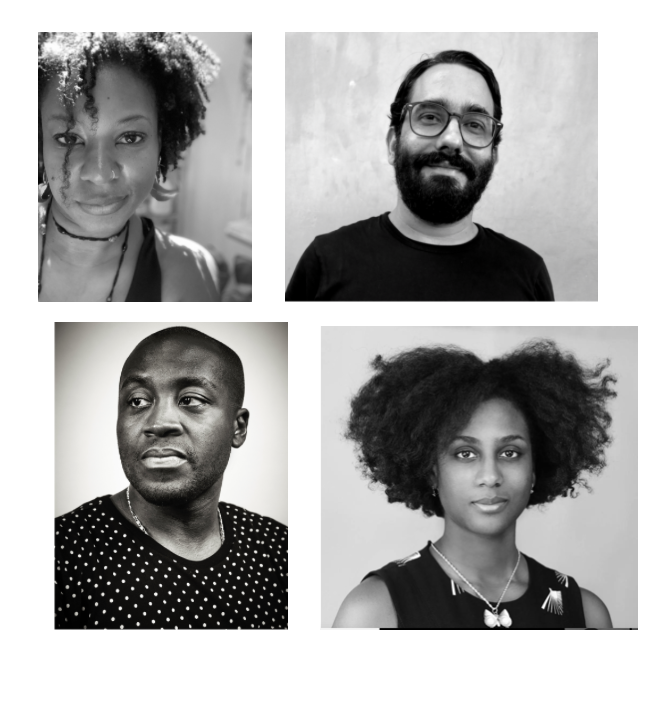
C Artist Amber Robles-Gordon talks "Successions: Traversing US Colonialism" with curator Larry Ossei-Mensah. . "Successions" is a conceptual juxtaposition that celebrates abstraction as an art form while leveraging it as a tool to interrogate past and current US policies within its federal district (Washington, DC) and territories (including Guam, Puerto Rico, and the US Virgin Islands) that it controls. . On view through December 12, 2021. Learn more and plan your visit:

https://www.american.edu/cas/museum/2021/successions.cfm

Read More