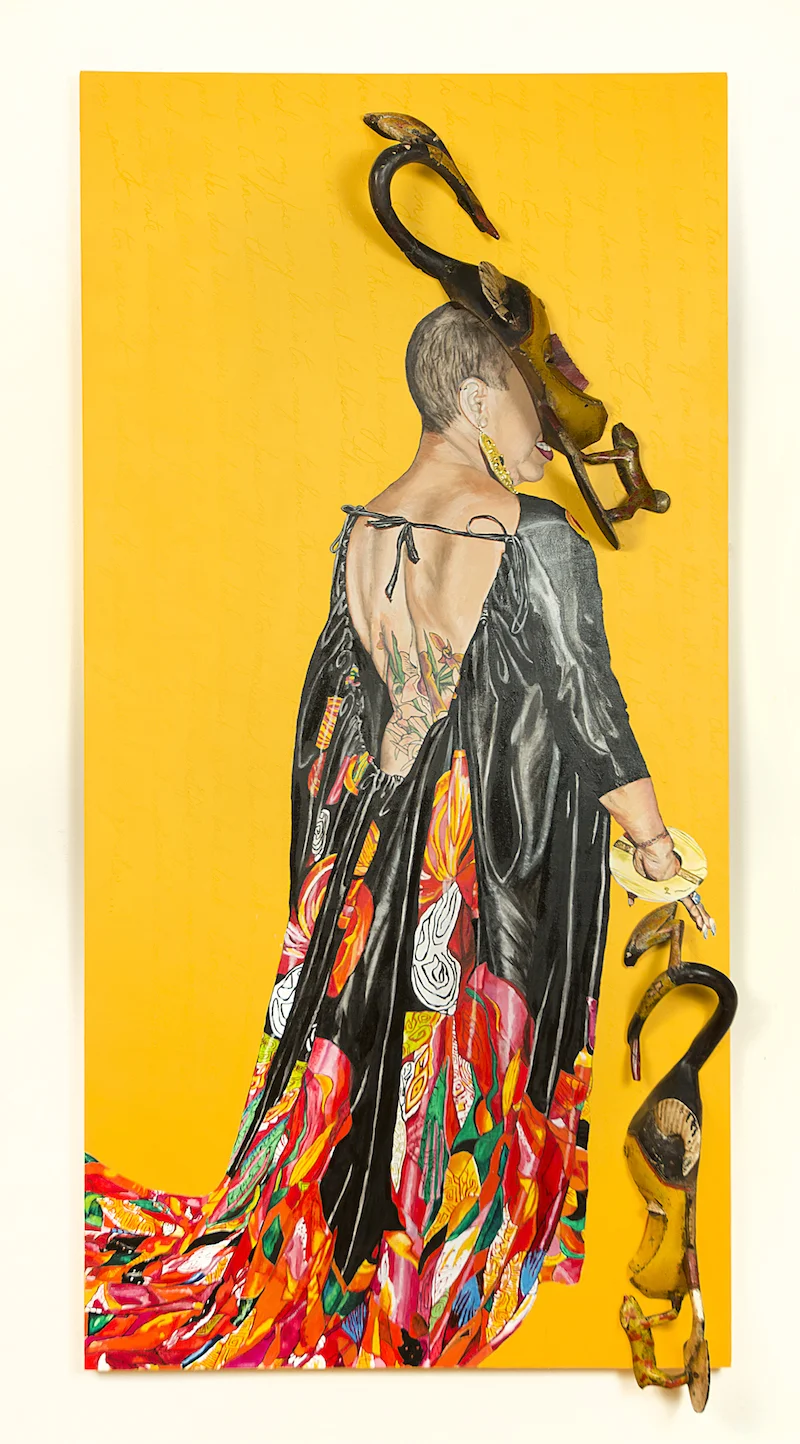
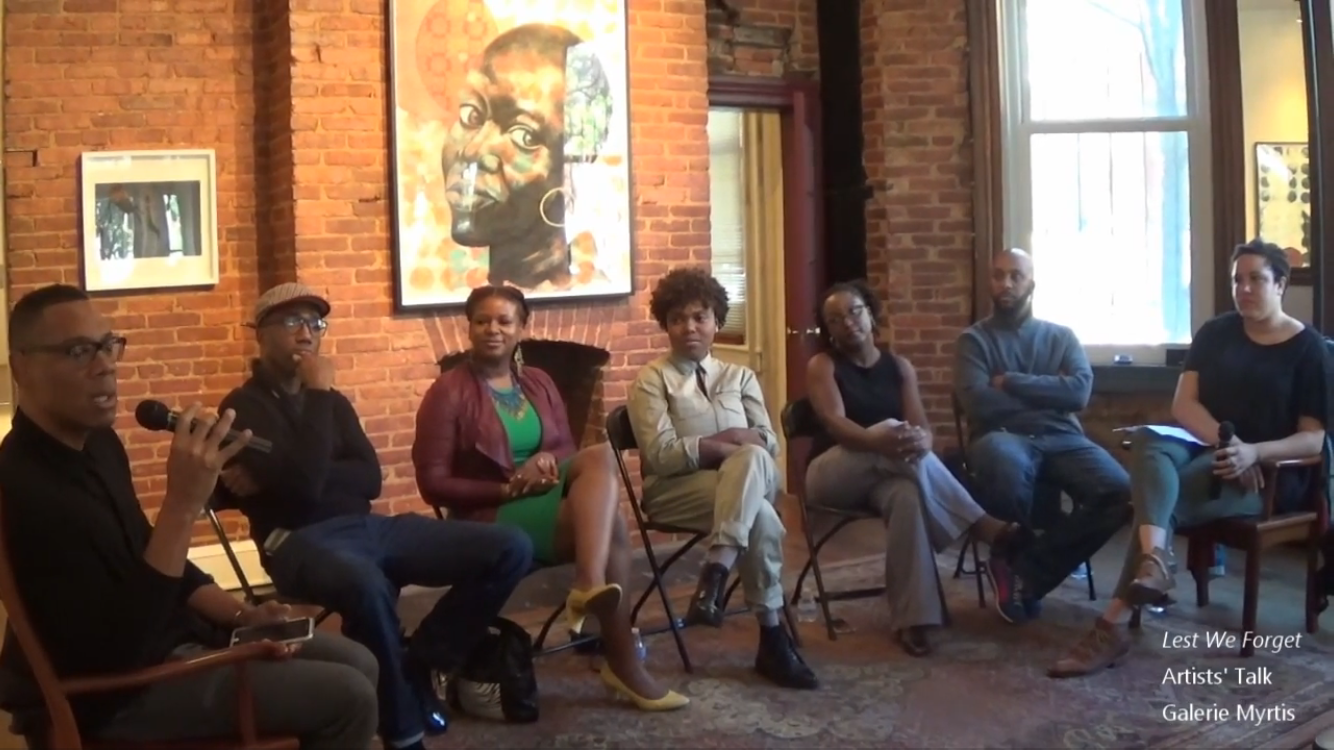
The exhibition presented at Galerie Myrtis, Lest We Forget examines pivotal moments and figures in US history, as well as the everyday occurrences and unknown individuals that have impacted, to various degrees, the African American experience here, and by extension, throughout the world.
Featured Artists
Larry Cook, Wesley Clark, Shaunte Gates, Delita Martin, Jamea Richmond-Edwards, Amber Robles-Gordon and Stan Squirewell
Curated by: Jarvis DuBois and Deirdre Darden
The Group Exhibition Lest We Forget at Galerie Myrtis reviewed by Angela N. Carroll
often wonder how these times will be remembered. What will future generations learn from this moment? Which stories will historians archive? What experiences will be forgotten? Watching the insanity of this election cycle has confirmed for me the importance of knowing histories; not just your own, but the distant and contemporary, local and international happenings that have shaped our present.
The rhetoric employed by the extreme wings of the GOP has empowered and emboldened embarrassingly inaccurate and flatly supremacist depictions of American history. Slogans like “Make America Great Again” assume that the growth of America’s empire occurred without the toil of immigrants, people transported by force, or those who relocated in the hopes of accessing the freedoms of democracy.
A recent poll released by Reuters revealed that 38% percent of American voters continue to support the GOP’s candidate despite his blatant disregard for anyone other than white men and general dismissal of fact-based platforms. I dare not try to understand the irrational reasoning of deplorables, but urge critical thinking voters to remember the whole and diverse contributions that sustain America. Lest we forget all those that came before us, live among us– the laboring bodies that support the world.
The exhibition titled Lest We Forget curated by Deirdre Darden and Jarvis DuBois at Galerie Myrtis interrogates a legacy of historical cultural bias; the conceptions that determine a story’s archivism or omission from history. Artists Wesley Clark, Larry Cook, Shaunte Gates, Jamea Richmonds-Edwards, Amber Robles-Gordon, and Stan Squirewell, collectively known as Delusions of Grandeur, and Delita Martin all contribute their own reflections about forgotten experiences in order to build a richer, more inclusive, and more accurate vision of history.
Read MoreOttis Street Arts Projects Presents: The Critiqued
We’re interested in elevating our conversations about art. We feel that group studios and areas of artist density provide fertile ground for interaction, conversation, growth and development. While this is an important part of our daily interaction as artists, we also feel that Curators, Critics, Gallarists, Collectors, Art Writers, and other Arts Professionals bring an amazing amount of insight for an Artist. With the our first two sessions of The Critique having received a great amount of interest and positive feedback, we’re going to keep it up!
Read MoreArt by Margret Rose Vendryes
Opening Reception - i found god in myself: the 40th anniversary of Ntozake Shange’s for colored girls…
African American Museum in Philadelphia
Curated by Souleo
Join us for the opening of AAMP's latest special exhibition i found god in myself: the 40th anniversary of Ntozake Shange’s for colored girls. This two-gallery art exhibit celebrates the 40th anniversary of the choreopoem, for colored girls who have considered suicide/when the rainbow is enuf, and is curated by Souleo.
Through 20 commissioned artworks by artists including Renee Cox (in collaboration with Rafia Santana), Kimberly Mayhorn, Dianne Smith, Margaret Rose Vendryes and Danny Simmons the exhibition is a tribute to the Broadway play. Each work honors the individual poems and underscores their enduring significance in highlighting issues impacting the lives of women of color.
Read MoreAmber Robles-Gordon's piece, "my rainbow is enuf," is part of the exhibit. Photo by Dianne Smith, courtesy of Robles-Gordon.
A Mosaic of Voices, Mediums and Black Womanhood
by Lian Parson, www.theavenuephilly.com
When “i found god in myself: the 40th anniversary for Ntozake Shange’s for colored girls” exhibit premiered, Shange herself attended to view the 20 original works curated by Peter “Souleo” Wright.
By then, she had suffered two strokes and was in a wheelchair. But when she saw the life-size portrait of herself by painter Margaret Rose Vendryes, Shange tried to get out of her wheelchair to show how the tattoos on her body perfectly matched the ones in the painting.
Read MoreAdrian ‘Viajero’ Román and Amber Robles-Gordon two Puerto Rican artists at The African American Museum in Philadelphia
PR ART NEWS -The Puerto Rican artists Adrian ‘Viajero’ Román and Amber Robles-Gordon are among the 20 artists whose works were selected for the group show “ i found god in myself: the 40 anniversary of Ntozake Shange’s for colored girls” is a two gallery art exhibit celebrating the 40th anniversary of the choreopoem/play for colored girls who have considered suicide/when the rainbow is enuf, curated by Souleo Wright at The African American Museum in Philadelphia.
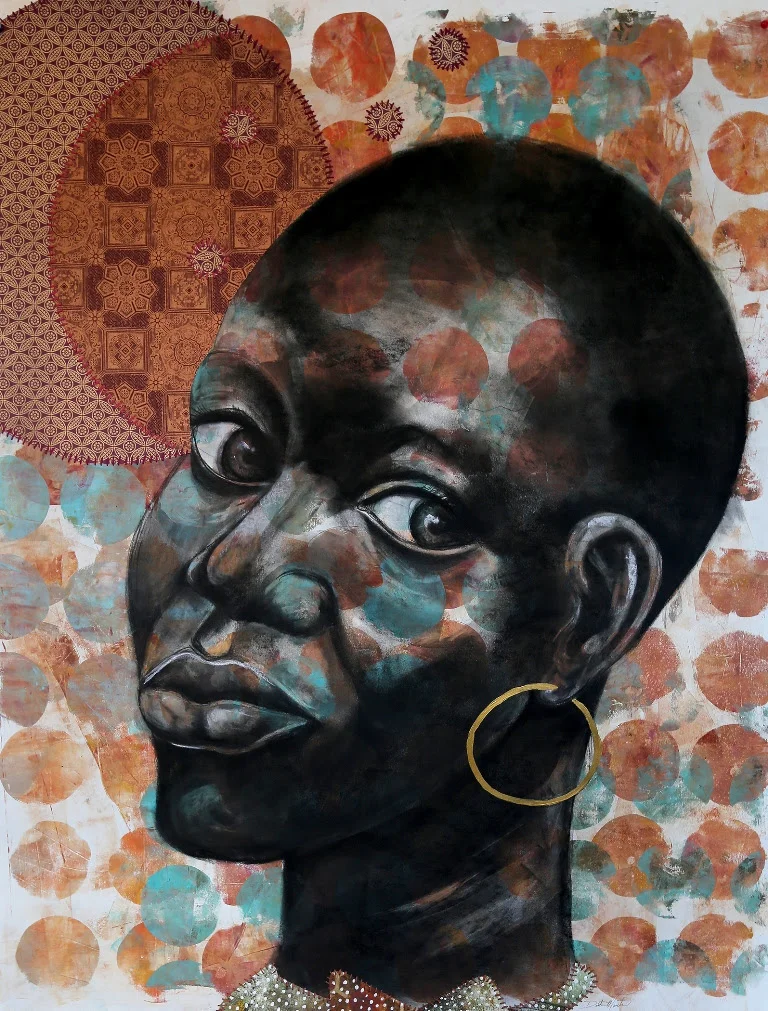
Read MoreThe Watcher, 2015, Gelatin printing, acrylic, collage, hand-stitching and conte, 50” x 38" by Delita Martin
Lest We Forget
Galerie Myrtis
About the Exhibition
The exhibition presented at Galerie Myrtis, Lest We Forget examines pivotal moments and figures in U.S. history, as well as the everyday occurrences and unknown individuals that have impacted, to various degrees, the African American experience here, and by extension, throughout the world.
Read MoreBy Emory Douglass
IT TAKES A NATION
EXHIBITION DESCRIPTION
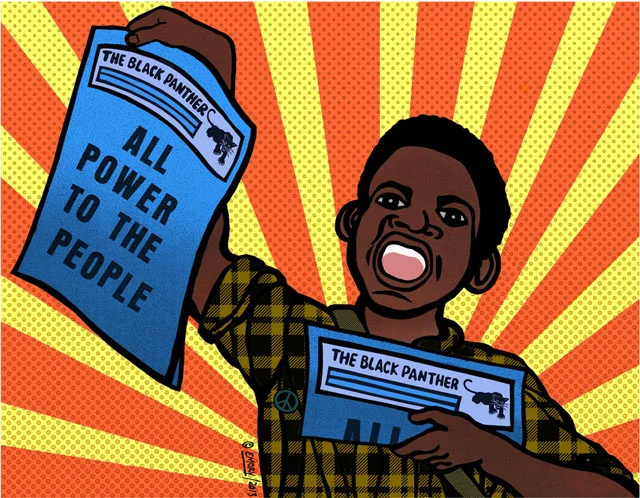
In the Alper Initiative space, Washington artists respond to the graphics of Black Panther artist Emory Douglas with sculpture, paintings, photography and multi-media installations. The exhibition features Emory Douglas and Howard University colleagues and members of the African Commune of Bad Relevant Artists (“AFRICOBRA”): Jeff Donaldson, Akili Ron Anderson, James Phillips, Jay Jarrell and Wadsworth Jarrell. Collectively, they create a powerful lens to the socio-political landscape of the late 1960s and 70s that helps to visualize the 1967 Black Panther Party 10-point platform addressing issues of freedom, employment, economic exploitation, affordable housing, education, war, police brutality, prison, due process, and access. The exhibition also includes artists examining these same issues 50 years later within a contemporary context, including: Holly Bass, Wesley Clark, Jay Coleman, Larry Cook, Tim Davis, Jamea Richmond Edwards, Shaunte Gates, Jennifer Gray, Amber Robles Gordon, Njena Jarvis, Simmie Knox, Graham Patrick, Beverly Price, Sheldon Scott, Stan Squirewell and Hank Willis Thomas.
Read MoreQuilts and Social Fabric: Heritage and Improvisation
Quilts and Social Fabric: Heritage and Improvisation
July 16, 2016 - January 16, 2017
PAST EXHIBITION
In Brief:
This exhibition uses the work of one of the most renowned artistic quilt makers, Faith Ringgold, as an entry point to look backward at traditional African American quilts and forward to decorative and artistic quilts, and the work of painters and mixed media artists who improvise upon the form.
Read MoreDC AFRICAN-AMERICAN ARTISTS CHALLENGE STEREOTYPES AT PHILLIPS COLLECTION Posted on June 30, 2016
http://artapedia.com/
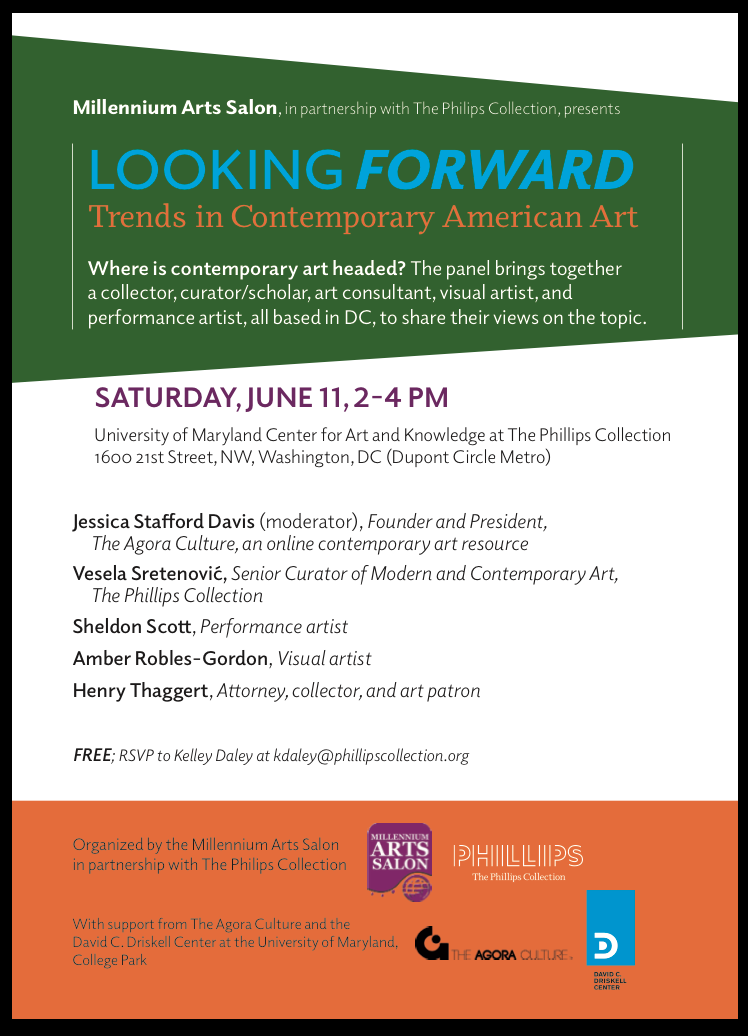
Read MoreTrends in Contemporary Art
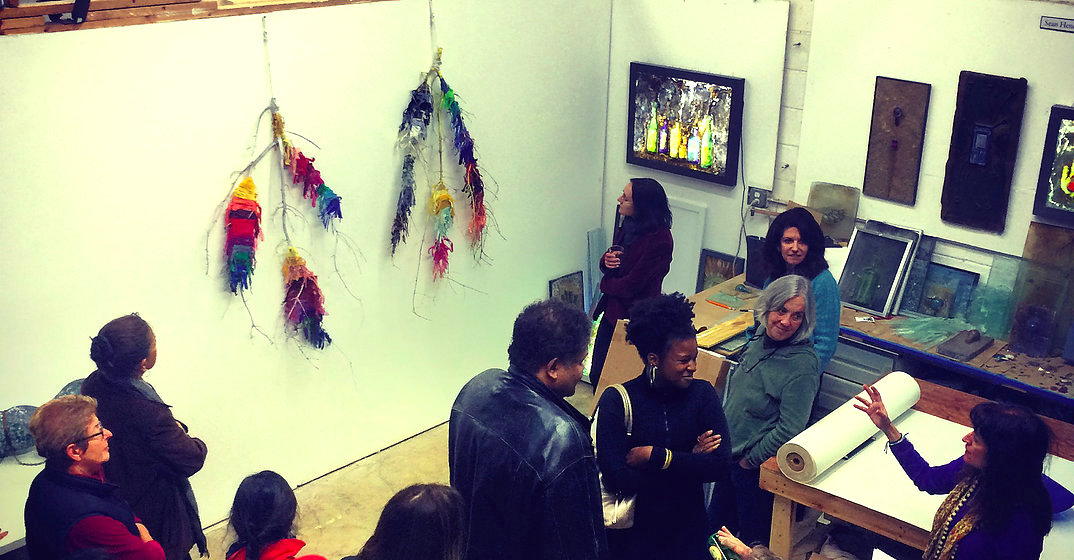
Visitors take in the art at opening night of The Critiqued.
Photo for East City Art by Eric Hope.
East City Artnotes: The Critiqued at Otis Street Arts Project
By Eric Hope, http://www.eastcityart.com
Coinciding with the organization’s one-year anniversary, Otis Street Arts Project recently unveiled its newest exhibition The Critiqued featuring works by thirteen area artists. Artists on display have all participated in the Project’s Critique program, an ongoing series of critical dialogues open to the public and facilitated by area arts professionals. Several of the finished pieces on display in this current exhibition were shown and discussed in unfinished states during those earlier peer reviews, giving audience members a unique perspective into the artists’ thought processes as they work to determine when a work is indeed finished.
Read MorePersonal Patterns-Panel Discussion at Montgomery College, Cafritz Foundation Arts Center
We will be talking about questions that were posed by curator, Claudia Rousseau's essay. We were interested in how an artist's use of pattern might reveal something about his/her sense of identity, express cultural traditions, ethnic or racial origins, and family ties. Might it be used to express an opinion on political or scientific ideas, or a concern for the environment and its current problems? How can pattern communicate emotion and express meaning? Does it invite intimacy or does it tend to hold the viewer at a distance? Is it feminist, or connote feminism, or is it universal? Where does it fit in modern art history?
Read MoreIn the galleries: Heading home
By Mark Jenkins, Washington Post
F. Scott Fitzgerald, group portraits and that R.E.M song. Lottery tickets, gentrification and a fast-food sign. These are among the artifacts and phenomena that define Rockville and D.C., respectively, in exhibitions that seek to reveal something of those places’ characters. The titles are telling. VisArts’s “(Come Back to) Rockville!” is a pep-squad cheer; Honfleur Gallery’s “How We Lost D.C.” is a blues lament.
Read More"How We Lost DC" at Honfleur Gallery Wednesday, Sept. 16
By Emily Walz, Washington City Paper
Few cities are undergoing a period of gentrification as lengthy as D.C.’s, and perhaps none are gentrifying as quickly. The individual stories of displacement, as well as the larger narrative arc that shows how class and racial lines overlap to push out poorer minority communities, have particular poignancy in D.C., one of the first cities in the U.S. with a black majority. Against this backdrop, the local African-American artist collective Delusions of Grandeur created How We Lost DC, an exhibition the group calls “a visual discourse on gentrification.” The work of Wesley Clark, Larry Cook, Shaunté Gates, Jamea Richmond-Edwards, Amber Robles-Gorden, and Stan Squirewell encompasses photography, textile, paintings, mixed media, and sculpture in a show that moves between portraiture and would-be artifacts to tapestry and art made from maps of the District itself.
Read Morehttp://rushphilanthropic.org/exhibition/my-big-black-america/
My Big Black America
http://rushphilanthropic.org
My Big Black America
Curated by Mikhaile Solomon
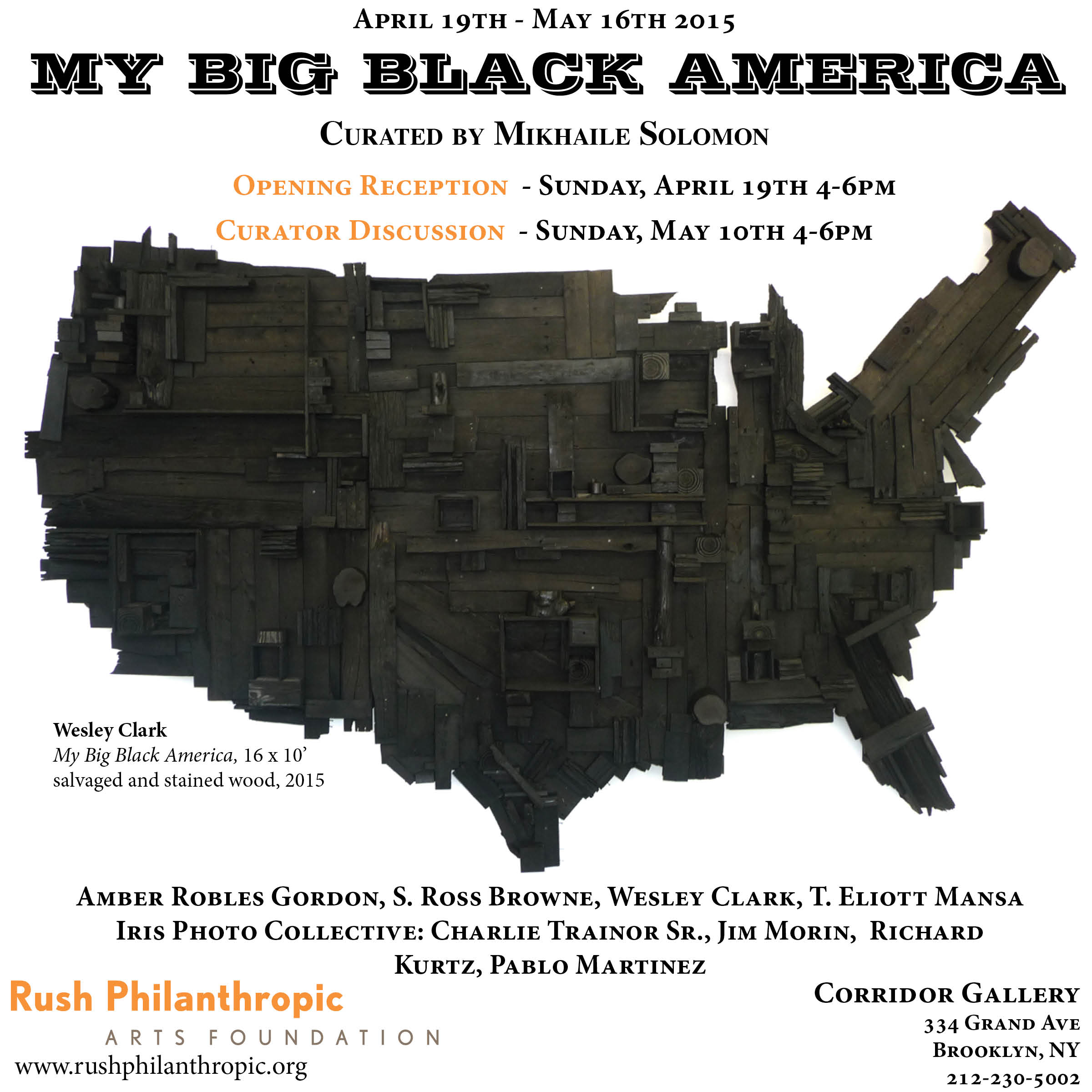
Through works in various media presented by a diverse group of contemporary artists, My BigBlack America, curated by Mikhaile Solomon, chronicles the losses and triumphs of BlackAmerica before and during Barack Obama’s presidency. Author Michael C. Dawson, argues “achieving the dreams of racial and economic equality will require the sort of coalition-building [that reaches] across racial divides that [has] always marked successful political movements”. The artists in My Big Black America collectively address this critical point in our history, in which we still experience inequality and injustices that damage the structural integrity of the entire nation. The exhibition title is based on Wesley Clark’s eponymous work, which serves as a metaphorical construct, illustrating Black America’s contribution to America as well as the injustices we have historically endured.
Read MoreArts & Culture in Anacostia - The Kojo Knamdi Show
The historic neighborhood of Anacostia has been home to the Smithsonian Anacostia Community Museum for nearly 50 years, where it’s focused on African American history and culture. In the past decade or so, cheaper rents East of the River have drawn artists and arts organizations to the area, including the Anacostia Playhouse, which relocated from H Street NE. We explore the arts scene, and what increasing development and property values will mean.
Guests
- Amber Robles Gordon Visual Artist
- Camille Giraud Akeju Director, Smithsonian Anacostia Community Museum
- John Johnson Playwright
WOMEN’S HISTORY MONTH: AMBER ROBLES-GORDON
BYT Staff, https://brightestyoungthings.com
March is Women’s History Month. Throughout the month we be profiled D.C. based women you should know. Amy Morse, the founder of Ideas Club, headed the project. Today she profiles Amber Robles-Gordon.
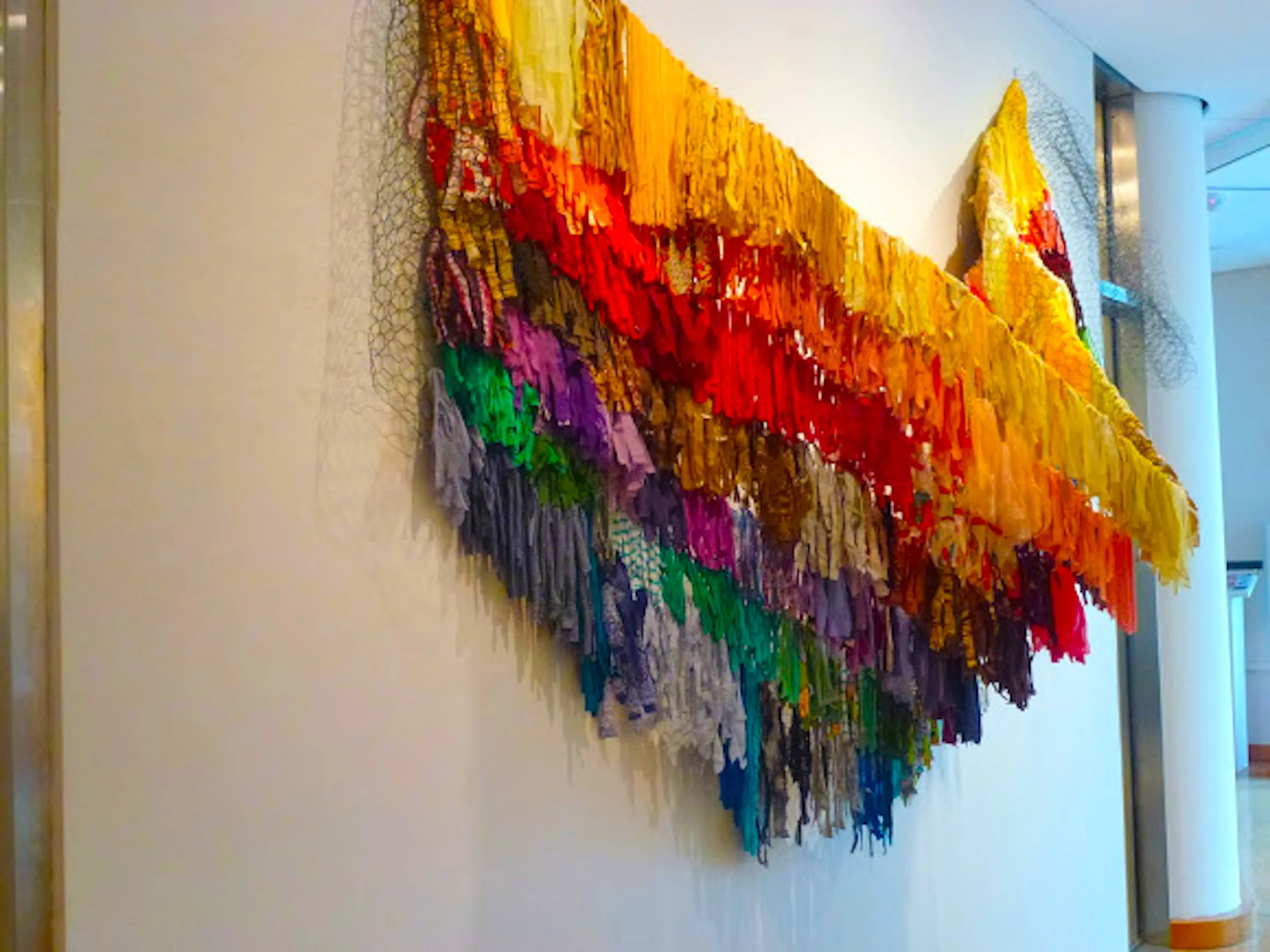
Amber is a D.C.-based changemaker who turns big ideas into visual art. Her work, which ranges from 50-foot banners draped on D.C. buildings, to installation art and mixed media assemblages, addresses global consumerism, gender imbalance and other major social cultural themes. Through the symbolic use of materials and their interactions, she exploratory meditations on her work read like spiritual healing practice. Her vantage point is unique, academically grounded (MFA in painting from Howard University), and incredibly beautiful. For those who enjoy interacting with creative nonfiction cultural critiques, she is a gem in D.C. of social commentary, drawing from an intuitive connection to herself and her spiritual practice.
Read MoreDivinity Revealed at African Heritage Cultural Arts Center
In honor of Women’s History Month, the African Heritage Cultural Arts Center presented the Amadlozi Gallery Exhibition
Divinity Revealed will premier works by national artists, LaToya Hobbs, Sheena Rose, Martin Nyarko, and Amber Robles -Gordon. This exhibition explores femininity from the artist’s perspective within the context of their community and the world. The gallery’s opening reception is March 5th at 6pm with curatorial presentations at 6:30pm at the African Heritage Cultural Arts Center, 6161 NW 22nd Avenue, Miami, FL 33142. It is free to attend, rsvp required. The Divinity Revealed exhibition is part of “Sankofa: Looking Back, Going Forward,” a year-long series of events and performances that bring alumni back to the African Heritage Cultural Arts Center to inspire the next generation of talent, in celebration of the Center’s fortieth anniversary with funding support from The John S. and James L. Knight Foundation, as part of its Knight Arts Challenge.
Read MoreExaminer.com: DC artists bring local flavor to Prizm Art Fair in Miami
Examiner.com
A talented group of creatives from the DC area are showing their work in the Prizm Art Fair at Art Basel Miami. Prizm is a curated exhibition founded in 2013 by Mikhaile Solomon, a Miami-based designer, arts advocate and producer. According to Solomon, the mission of Prizm is to promote artists of color and “expand the spectrum of international artists from the African Diaspora and emerging markets at one of the most prestigious art festivals in the world.”
The Prizm Art Fair, located at the Miami Center For Architecture And Design (100 NE 1st Avenue), is one of many events held during Art Basel week - an international showcase for contemporary art featuring over 300 distinguished galleries and attracting an estimated 80,000 visitors.
Read More